Zone 9, Same as the Valley
Burbank's zip codes fall in Title 24 Climate Zone 9, the same inland classification as most of the San Fernando Valley, which means the state's steep-slope cool-roof rule generally applies to a tile or shingle reroof here.
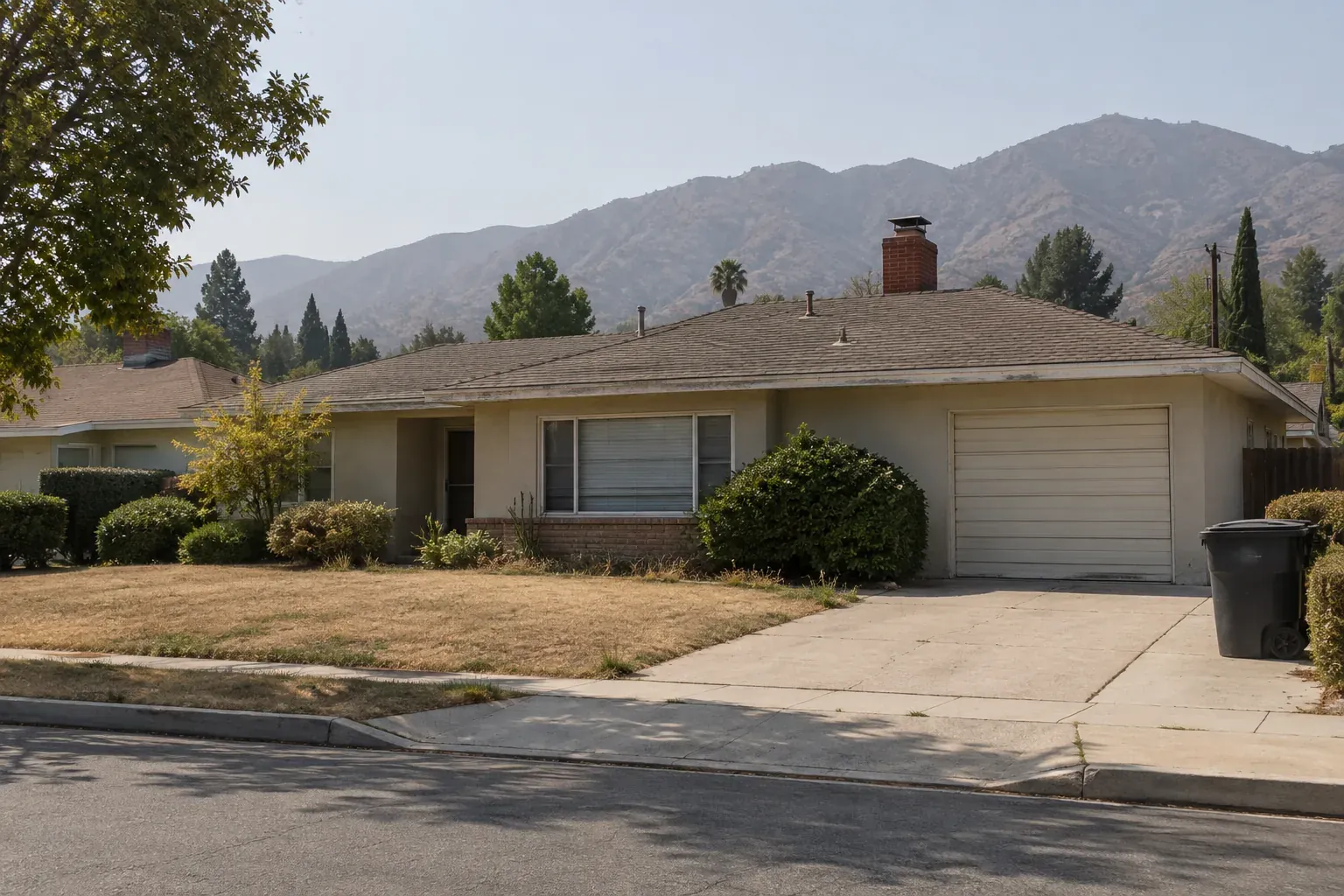
Burbank runs on its own utility, its own permit office, and its own fire-hazard map along the Verdugo Mountains. None of the citywide LADWP or LADBS rules carry over automatically here.
What's happening with your Burbank roof?
Burbank runs its own municipal utility, Burbank Water and Power (BWP), separate from LADWP entirely. That matters directly for your wallet: LADWP's Consumer Rebate Program, the one most LA homeowners hear about for cool roofs, doesn't extend into Burbank at all. Don't budget around it.
BWP's cool-roof incentive is for commercial and business customers through its Energy Solutions Program: the greater of $0.05 per kWh saved or $150 per kW of demand reduction, capped at 50% of project cost, tied to Title 24 cool-roof compliance. Its residential Home Improvement Program covers measures such as insulation and duct sealing rather than a cool-roof cash rebate, so homeowners should check BWP's program page for current terms before counting on a dollar figure.
Burbank's zip codes fall in Title 24 Climate Zone 9, the same inland classification as most of the San Fernando Valley, which means the state's steep-slope cool-roof rule generally applies to a tile or shingle reroof here.
BWP Energy Solutions Program: City of Burbank / BWP, burbankwaterandpower.com. LADWP program scope: ladwp.com, Consumer Rebate Program.
The Verdugo Mountains form Burbank's northern border, climbing to roughly 800 feet against a valley floor closer to 500 feet. Both the state and the city publish Very High Fire Hazard Severity Zone maps covering the hillside neighborhoods along that edge. Work in those zones requires a Class A fire-rated roof assembly, tested to ASTM E108 or UL 790, whether that's concrete tile, metal or a Class A-listed composition shingle system installed as a whole assembly, not just a surface coating.
Flatter central and southern Burbank, away from the Verdugo foothills, generally isn't inside the mapped zone, but confirm your specific address on CAL FIRE's map before choosing a material, since boundaries have shifted with recent statewide updates.
Fire zone mapping: OSFM, "Burbank – Very High Fire Hazard Severity Zones in LRA"; City of Burbank Attachment H. Class A requirement: CRC §R337 / CBC Chapter 7A.
Fire isn't the only structural consideration in Burbank. The Verdugo Fault, capable of a magnitude 6.5 event, runs through the area, and eight major faults sit within roughly 13.5 miles of downtown. The 1971 San Fernando and 1994 Northridge earthquakes both caused documented local damage, including masonry failures. That history is worth raising with a contractor alongside fire-hardening, since a reroof is also a reasonable time to check that roof-to-wall connections and bracing meet current standards, not just that the covering material is right.
A fire-hardening upgrade, a structural check and a standard reroof are three different scopes, so it helps to say which one you're asking a roofer to price.
Because Burbank is its own incorporated city, LADBS has no role here at all. Reroofing permits are handled by Burbank Community Development, Building & Safety, and most straightforward reroofs are processed as a Simple Permit, a repair-and-maintenance category that skips a full plan check. Confirm the current filing steps with the department before scheduling work. See our roofing permits guide for how this compares to LADBS's process in the rest of LA County.
More than 62% of Burbank's housing stock predates 1970, with a major development wave in Magnolia Park between 1945 and 1950 tied to the Lockheed aircraft-plant boom. Composition shingle roofing is the material to check first on houses of that age.
Metal roofing is non-combustible and is commonly Class A rated; the rating applies to the tested assembly, so check the product's listing. That makes it worth considering on the Verdugo-adjacent hillside streets; see metal roofing for how it compares to a fire-rated shingle assembly.
Garage conversions and room additions on older Burbank lots frequently carry their own low-slope flat roofing, which needs its own drainage and flashing check separate from the main roof.
For what shingle, tile, metal and flat-roof jobs cost in LA, see the roof replacement cost guide.
An aging, unreplaced roof can affect coverage options before it ever leaks, and California's FAIR Plan has its own conditions for older dwellings. See our roof insurance guide for the details.
Burbank sits at the eastern edge of the San Fernando Valley page's territory, close to North Hollywood and Glendale, which shares the Verdugo Mountains fire exposure from the other side. See all areas, or start from Roofing Los Angeles.
Burbank is its own incorporated city, so LADBS doesn't apply here at all. Permits go through Burbank Community Development, Building & Safety, and most reroofs qualify as a Simple Permit, a repair-and-maintenance category that skips full plan check and can be handled over the counter or, for some project types, online.
No. Burbank is served by its own municipal utility, Burbank Water and Power, not LADWP, so LADWP's Consumer Rebate Program simply doesn't reach Burbank addresses. Don't assume it applies just because you're in LA County.
For commercial and business customers, yes: BWP's Energy Solutions Program pays the greater of $0.05 per kWh saved or $150 per kW of demand saved, capped at 50% of project cost, for a Title 24-compliant cool roof. Its residential Home Improvement Program covers other efficiency measures rather than a cool-roof cash rebate, so check BWP's residential program page for current terms before assuming a dollar figure for a house.
The Verdugo Mountains form Burbank's northern border, climbing to roughly 800 feet against a valley floor around 500 feet, and the hillside neighborhoods along that edge are mapped as Very High Fire Hazard Severity Zone by both the state and the city. Work there needs a Class A fire-rated roof assembly; flatter central and southern Burbank generally isn't in the mapped zone.
No citywide historic district or roofing design-review framework applies to a typical Burbank home. Individual landmarks exist, such as the Burbank Theatre building dating to 1893, but those are site-specific designations, not an area-wide overlay.
More than 62% of Burbank's housing stock was built before 1970, with a major post-war development wave in the Magnolia Park area between 1945 and 1950 tied to the Lockheed aircraft-plant boom. Composition shingle is the material to check first on houses of that age; metal and tile come into play on the hillside streets.
Tell us whether you're near the Verdugo hillside or in flatter Burbank, the roof type if you know it, and what you're seeing.