Serving homes and buildings across Los Angeles County Free estimates Written line-item quotes
Roofing Los AngelesRoof repair & replacement Free estimate
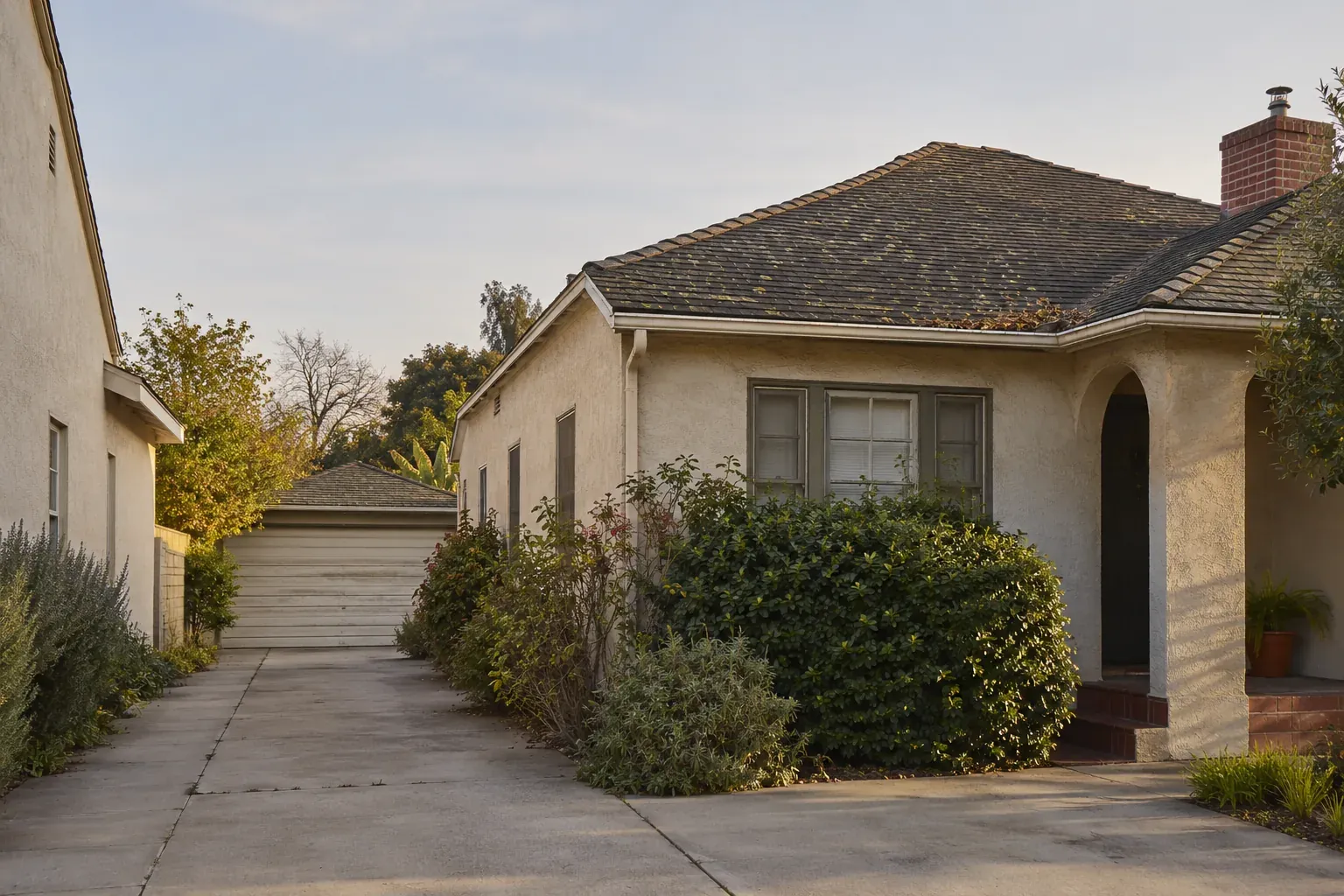
Older stucco home with a weathered asphalt shingle roof

How Long Does a Roof Last?By Material, in Los Angeles

"How long should my roof last" doesn't have one answer, it has about a dozen, one per material. A clay tile roof and a TPO flat roof installed the same year are on completely different clocks.

Want a read on your roof's age vs. condition?

A ZIP code is enough to get started.

Once you have filled it in, one of our contractors will reach out to you ASAP.

  • Free estimates
  • Written line-item quotes
  • Photos of the roof before any work
  • Permits pulled where required

Roof Lifespan by Material

MaterialTypical lifespan
Asphalt shingle, 3-tab20–30 yrs
Asphalt shingle, architectural30–45 yrs (premium lines at the top)
Clay tile50–100+ yrs (the tile; the underlayment beneath usually needs replacing much sooner)
Concrete tile40–100 yrs
Metal, steel40–60 yrs
Metal, aluminum50–80 yrs
TPO15–25 yrs
PVC20–30 yrs
Modified bitumen (torch-down)15–25 yrs
Built-up roofing (BUR)20–30 yrs

Roofing-industry lifespan summaries (RoofOnline and published guides), general consensus ranges, 2026. Treat as typical ranges, not a warranty or a code-mandated figure.

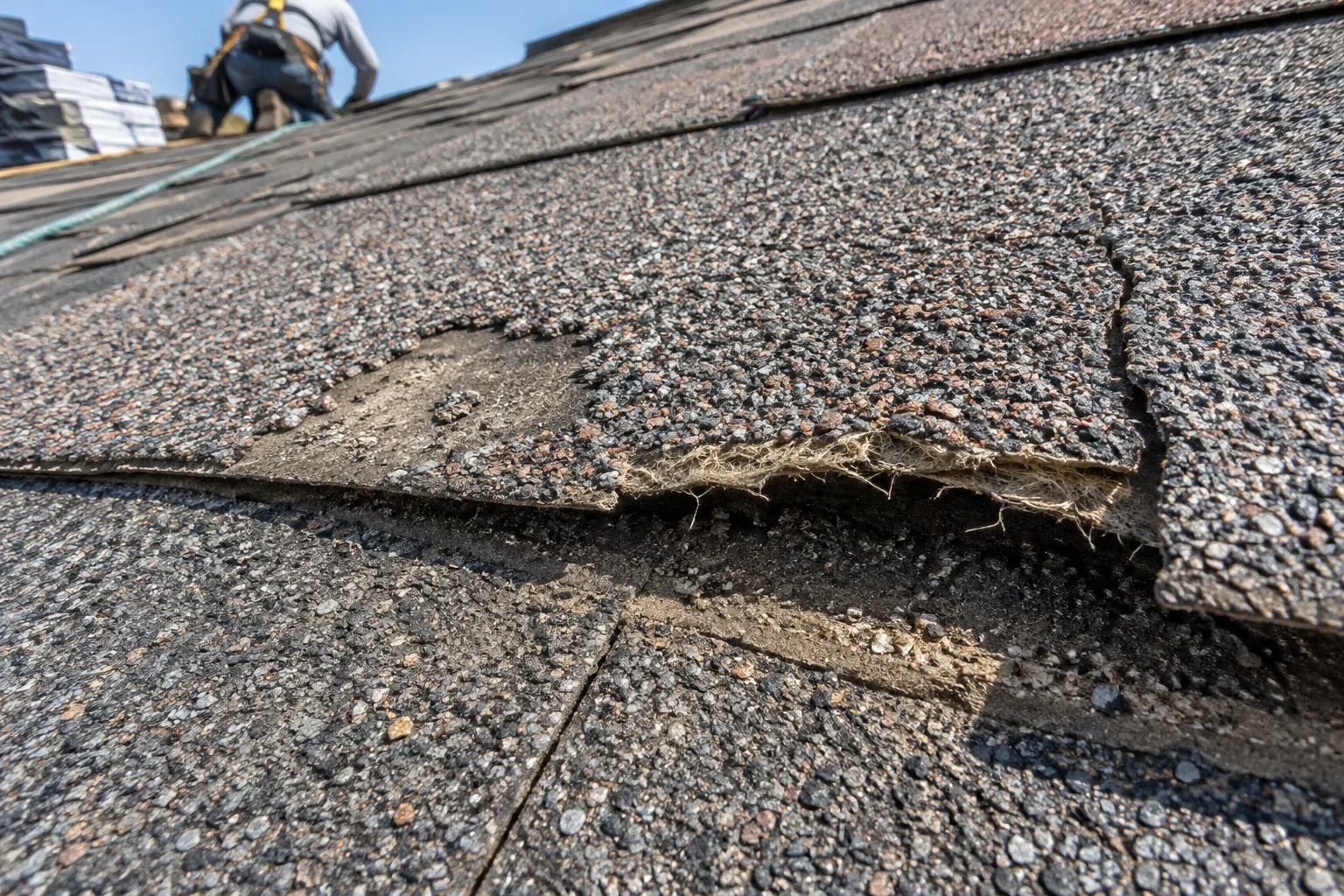
Worn-out asphalt shingles with bare mat showing through
Bare mat showing where the granules are gone: an asphalt shingle roof at the end of its service life.

Lifespan by Material, in Detail

Asphalt Shingle: 3-Tab and Architectural

Standard 3-tab shingles run 20 to 30 years. Architectural (dimensional) shingles, the heavier class that usually carries 30-year-to-lifetime warranties, run 30 to 45 years, with premium lines at the top of that range. In practice, sun and summer heat age shingles in LA, and service life tends to land toward the lower half of whichever range applies, especially on roofs with poor attic ventilation.

Clay Tile and Concrete Tile

Clay tile itself lasts 50 to 100+ years. Concrete tile runs 40 to 100 years. The catch with both: the tile itself is durable, but the waterproofing underlayment sitting beneath it fails on its own schedule, usually well before the tile does. A tile roof that looks fine from the curb can already be leaking underneath. See tile roofing in Los Angeles and our tile underlayment replacement guide. When the underlayment is the question, send Roofing Los Angeles a note; a proper inspection lifts a few tiles and documents what's underneath.

Tile Underlayment

There's no single industry-cited lifespan figure for tile underlayment the way there is for the tile itself, but it is the weak point: many LA tile roofs on 1920s–1970s homes now need underlayment replacement even though the surface tile is intact and reusable. The fix is a "lift-and-relay": tiles are removed, new underlayment goes down, and the sound tiles are reinstalled.

Metal: Standing Seam

Steel standing-seam roofing typically lasts 40 to 60 years, and aluminum 50 to 80 years. Metal roofing is non-combustible and is commonly Class A rated; the rating applies to the tested assembly, so check the product's listing. Some other roof types only reach Class A by adding underlayment layers to the whole assembly.

TPO and PVC (Flat Roofs)

TPO is typically reported at 15 to 25 years, PVC at 20 to 30 years. Both are heat-welded single-ply membranes common on LA flat and low-slope sections, and both are available in cool-roof-rated products for Title 24 compliance.

Modified Bitumen (Torch-Down) and Built-Up Roofing

Modified bitumen (torch-down or cold-applied) is typically reported at 15 to 25 years, and traditional built-up roofing (BUR) at 20 to 30 years. Both are multi-layer systems, common on older LA flat roofs, and both are usually good candidates for a coating restoration rather than a full tear-off if the membrane is aged but the insulation underneath is still dry.

Spray Foam and Coatings

Spray polyurethane foam (SPF) with a protective coating and silicone or acrylic restoration coatings are common ways to extend a flat roof's service life without a full tear-off, but their service life depends heavily on the product and the thickness applied. Recoat on the manufacturer's schedule. What is clear: silicone coatings resist UV degradation and tolerate continuous ponding water better than acrylic, which can chalk, embrittle and isn't warrantied for standing water. Ask any contractor proposing a coating for the manufacturer's specific warranty term on your substrate.

Skylights

There's no single industry-cited lifespan figure for a skylight unit either. The standard trade guidance is to replace an original or aging skylight at the same time as a full roof replacement, since re-flashing an old unit into new roofing is a common recurring leak point. Flashing failure is the most common cause of skylight leaks, more often than the glass or the seal. See our skylight repair and replacement page.

Gutters

Gutters aren't part of the roofing material's clock, but they directly affect how long the roof itself lasts: clogged or undersized gutters let water back up under the drip edge and against fascia and flashing. See gutter installation in Los Angeles, and the maintenance section below for how gutters factor into extending a roof's life.
Signs a Roof Is Nearing the End

  • Shingle: curling, cracked or missing shingles, and granules collecting in the gutters.
  • Tile: multiple cracked or slipped tiles, or a stain appearing on the ceiling below an otherwise intact-looking roof.
  • Flat: water ponding on the surface for more than 48 hours after rain, under conditions that should allow it to dry, which is the industry threshold for a drainage problem rather than normal lag (NRCA).
  • Metal: rust at fasteners or seams, or panels lifting at the edges.
  • Any type: repeat leaks in new spots each time it rains.

Age Alone Isn't the Test

A roof at the low end of its material's typical range but showing several of these signs is worth a closer look now. One well past the high end but still tight and dry doesn't need replacing on the calendar alone. See our repair-or-replace decision guide for the fuller breakdown by roof type.

What Shortens a Roof's Life in Los Angeles

Not sure where your roof stands against these conditions? Send us a note.

How to Extend It

Two habits do most of the work: catch problems early, and keep water moving off the roof.

  1. Inspect before the rainy seasonA certified roof inspection in California typically runs $300–$500, with a separate 2-year certification letter (a different document, often requested for insurance or real estate) running $75–$200.
  2. Twice-yearly checks on flat and commercial roofsOne inspection before winter and one after catches small failures before they become interior damage.
  3. Keep gutters and drains clearClogged gutters and roof drains cause ponding and back-up at the drip edge, the fastest way to shorten an otherwise sound roof's life.
  4. Re-flash, don't just resealSmearing sealant over failed flashing buys a season at most; replacing the flashing properly is what actually extends the roof.

Roof Certification, Explained

A roof inspection and a roof certification letter are two different things: the inspection is the visit and diagnosis, the certification is a separate letter (often required by lenders or insurers) stating the roof's condition and expected remaining life. FHA loans, for example, generally require at least 2 years of remaining useful life documented before a loan can close.

How Long a Roof Lasts: FAQs

How long does a roof last in Los Angeles?

It depends entirely on the material. 3-tab asphalt shingle runs 20 to 30 years and architectural 30 to 45, clay tile 50 to 100+ years, concrete tile 40 to 100 years, metal (steel) 40 to 60 years, and flat-roof membranes like TPO or modified bitumen 15 to 25 years. LA's sun, heat and wind tend to push materials toward the shorter end of their range without regular maintenance.

How long does a new roof last?

A newly installed roof should reach the full range for its material, provided it's installed correctly and maintained: 20 to 30 years for 3-tab asphalt shingle (30 to 45 for architectural), 15 to 25 years for a TPO or modified bitumen flat roof, and 40 years or more for tile or metal. Poor ventilation, a bad install, or deferred maintenance are the most common reasons a roof falls short of that range.

Does a 30-year shingle really last 30 years?

Not reliably. "30-year" is the manufacturer's rating, not a promise of service life. Real-world life is 20 to 30 years for 3-tab and 30 to 45 for architectural shingles, with premium lines at the top. In LA, sun and heat age shingles, so service life tends to land toward the lower half of the range, more so with poor attic ventilation.

How long does a tile roof last?

Clay tile typically lasts 50 years or more, and up to 100 to 150 years for high-quality material. Concrete tile runs 40 to 100 years. In both cases, the tiles themselves often outlast the underlayment beneath them by decades, which is why a tile roof can look fine from the street while it's actively leaking.

How long does a metal roof last?

Steel roofing typically lasts 40 to 60 years, and aluminum 50 to 80 years. Metal roofing is non-combustible and is commonly Class A rated; the rating applies to the tested assembly, so check the product's listing.

How long does a tarp last on a roof?

Plan on 60 to 90 days for a standard tarp. A heavy-duty 10-mil tarp can be engineered to hold up to about 2 years, but thinner tarps can degrade in as little as 3 months from UV, wind and debris. Treat any tarp as a 30-to-90-day stopgap, not a long-term fix.

How often should a roof be replaced?

Follow the material's typical range and your roof's actual condition, not a fixed calendar interval: asphalt shingle roughly 20 to 45 years depending on the grade, flat membranes like TPO around 15 to 25 years, and tile or metal well past 40 years. A roof in good condition near the low end of its range doesn't need replacing on age alone; one showing widespread wear well before that point does.

What shortens a roof's life in Los Angeles?

Constant UV exposure and summer heat dry out and embrittle asphalt and underlayment faster than in milder climates. Santa Ana winds lift and crease shingles and can slip tile. Near the coast, salt air and marine moisture are generally understood to age exposed metal fasteners and flashing faster. Poor attic ventilation traps heat against the underside of the roof deck year-round, accelerating all of the above.

Not sure where your roof stands?

Tell us the material and roughly how old it is. A roofer can then say whether it's inside its expected range or worth a closer look.

A ZIP code is enough to get started.

Once you have filled it in, one of our contractors will reach out to you ASAP.

Ask us to look