Salt Air, In Short
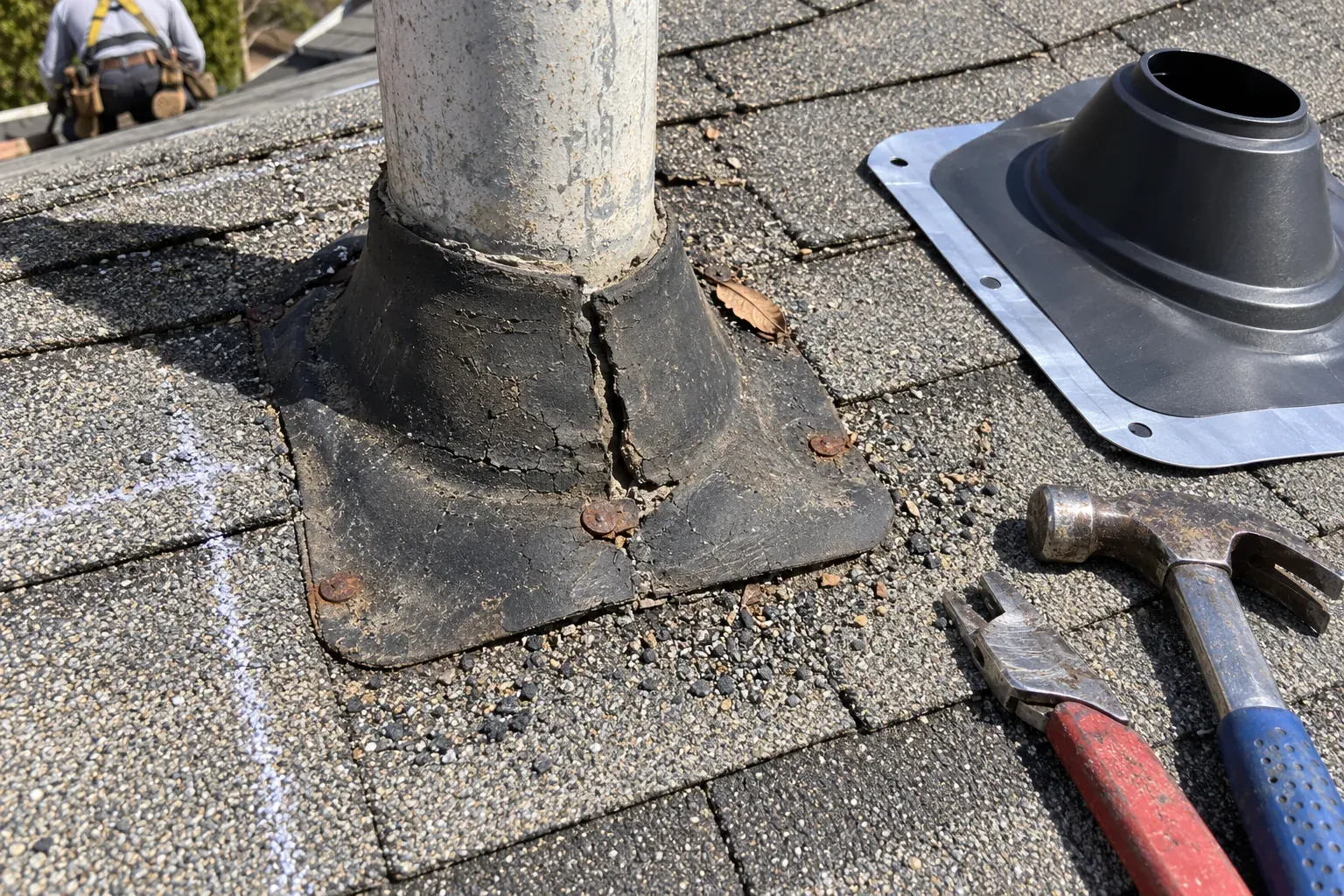
Metal parts age first near the water. Check chimney and vent flashing, gutters and fasteners on a shorter cycle than you would a few miles inland. See roof repair for flashing work.
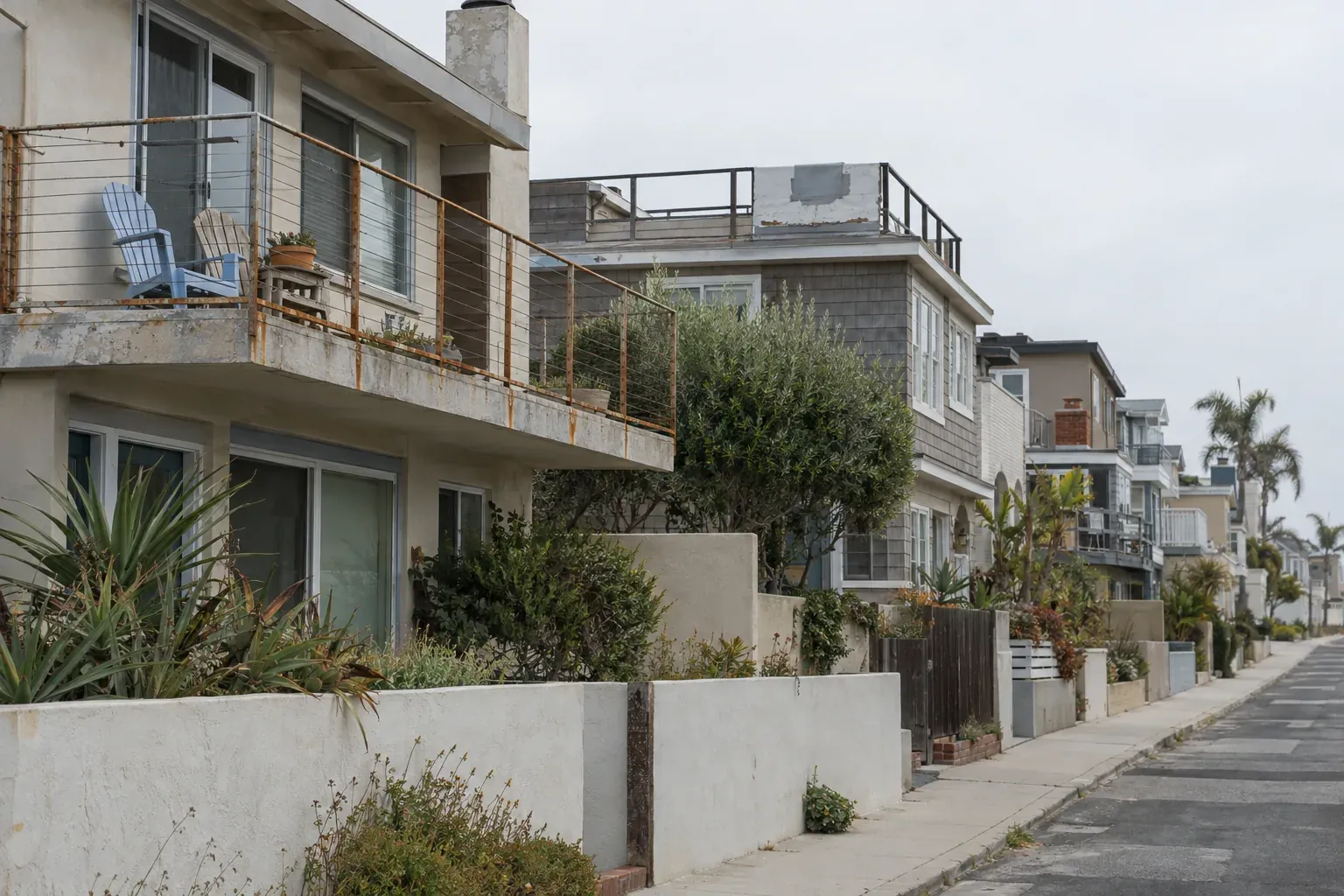
Near the water, salt air and marine moisture are generally understood to age metal flashing and fasteners faster. The South Bay is mostly Title 24 zone 6, with inland pockets in zone 8.
What's going on with your South Bay roof?
The coastal South Bay, including the beach cities and most of Torrance, is in Title 24 Climate Zone 6. Inland pockets are in Climate Zone 8: Torrance zips 90504 and 90506, and nearby Inglewood and Long Beach 90805, 90807 and 90808. A steep-slope single-family reroof in zone 6 has no cool-roof requirement, while zone 8 is covered by the steep-slope rule (zones 4 and 8–15). The low-slope rule (zones 4 and 6–15) applies to flat sections in both. The California Energy Commission's climate zone lookup is the authority for any single parcel.
Near the coast, salt air and marine moisture are generally understood to age metal flashing, fasteners, gutters and pipe boots faster. On a beach-city roof that metal is worth checking on its own, because a corroded flashing can let water in while the tile or shingle above it still looks sound.
Metal parts age first near the water. Check chimney and vent flashing, gutters and fasteners on a shorter cycle than you would a few miles inland. See roof repair for flashing work.
Climate zone 6 and 8 cool-roof rule applicability: Cool Roof Rating Council, California Title 24 summary (2025 Energy Code; reroof values unchanged from 2022); zone by zip via the SoCalREN Climate Zone Directory (source: California Energy Commission).
If your property is in Palos Verdes Estates, a city permit isn't the only approval a reroof needs. The Palos Verdes Homes Association's Art Jury is a quasi-governmental architectural review body, created under the original Palos Verdes Trust Indenture, with independent authority over the external appearance of a project. That authority explicitly includes re-roofing, along with repainting and window or door replacement, separate from the city's own building permit. The Art Jury meets bi-weekly, and applications for minor projects like a reroof are due by noon the preceding Monday. Budget that extra step into your timeline before picking a roofing material or color for a Palos Verdes Estates home.
The Building & Safety Division processes reroof and other over-the-counter permits through the city's online iWorQ portal.
Community Development's Building and Safety Division requires a permit for reroof work, same as most residential building projects.
The city's own Building and Safety Division now provides all building services directly, a change from the prior arrangement where LA County handled them.
San Pedro is a neighborhood of the City of Los Angeles, so a reroof there goes through LADBS, where more than 100 sq ft of reroofing needs a permit. Torrance has its own building department, so check its current reroof requirements with the City of Torrance before work starts. Unincorporated pockets near Torrance and Harbor City are now handled by LA County's Lomita District Office rather than a separate county field office, as of a mid-2026 transition. See our roofing permits guide for what LA-area reroofs generally need.
Parts of the Palos Verdes Peninsula carry a Fire Hazard Severity Zone designation, which requires a Class A fire-rated roof assembly for construction there. The honest trade-off worth knowing: under CAL FIRE's updated 2025 maps, some Peninsula areas, including parts of Rancho Palos Verdes, have reportedly been downgraded from "very high" to "high" following mitigation work, unlike many other LA hillside areas where zones expanded. Confirm your specific address on CAL FIRE's current map rather than assuming either direction.
Fire hazard zone mapping and the Peninsula downgrade: CAL FIRE 2025 updated maps, as reported by LAist.
Redondo Beach, Manhattan Beach and Hermosa Beach are mostly composition shingle, with some tile further from the immediate coastline. Corroded flashing is the usual thing to check first on these.
Palos Verdes Estates and Rancho Palos Verdes lean toward clay and concrete tile on larger hillside lots, where access and roof pitch add to the cost of both repair and replacement.
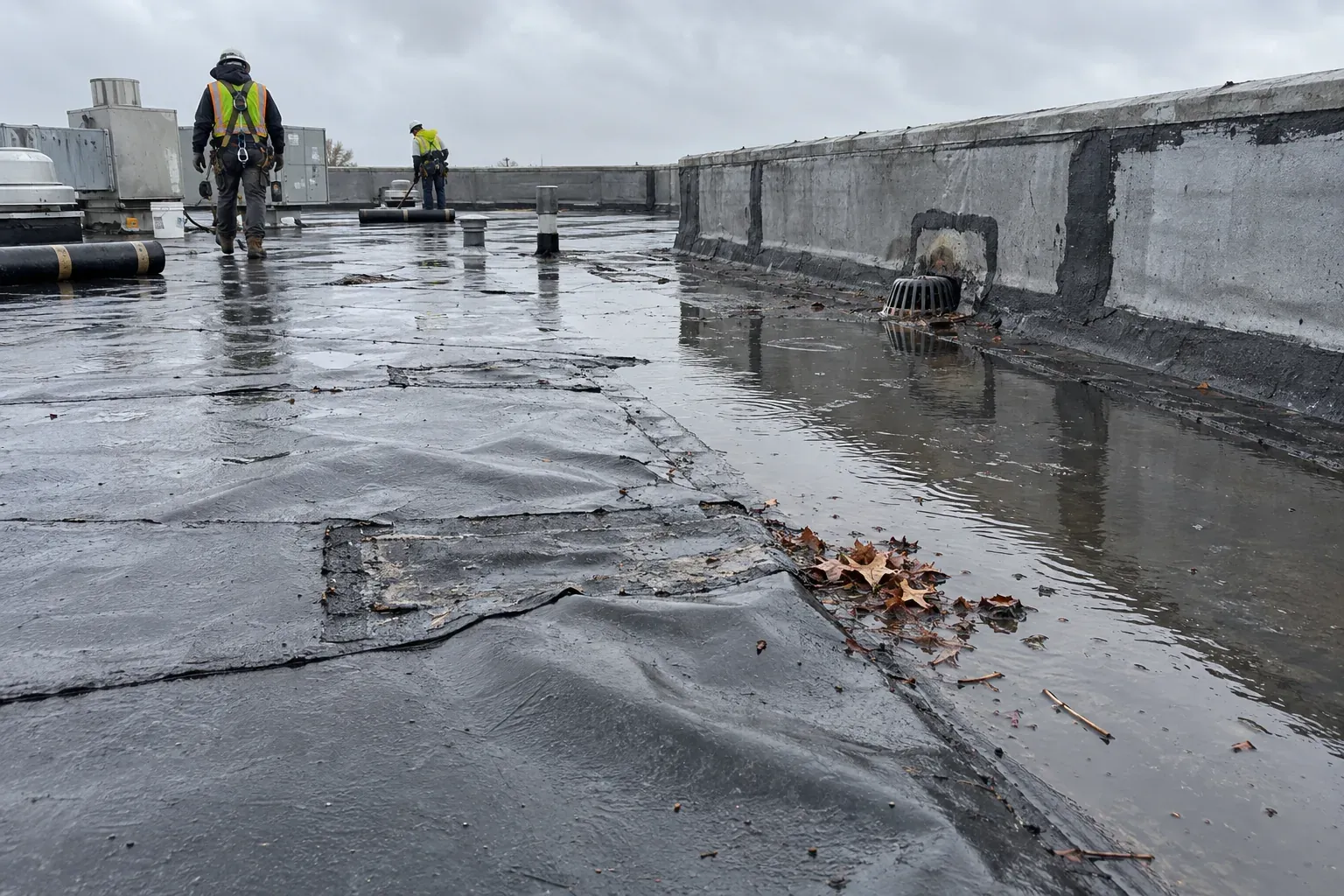
Narrow beach-city lots often carry a flat or low-slope roof section, sometimes over a rooftop deck, where drainage and membrane condition matter more than in a typical pitched-roof home.
If a coastal roof isn't leaking yet but the flashing looks rough, the repair-or-replace guide covers when patching stops making sense. Send the form with your city and roof type to get started.
Not the material cost, but it changes the maintenance cadence. Flashing and gutter checks are cheaper as routine upkeep than as an emergency repair after corrosion lets water in. For what shingle, tile and flat-roof jobs cost in LA, see the roof replacement cost guide.
LA's wet season runs roughly November through April, wettest in February. May through October is the practical reroofing window, and it also leaves Palos Verdes Estates homeowners time for Art Jury review before winter. For roofing beyond the South Bay, see Roofing Los Angeles.
It's a quasi-governmental architectural review body created under the original Palos Verdes Trust Indenture, separate from the City of Palos Verdes Estates' own building permit process. It has independent authority to review the external appearance of a project, including re-roofing, and meets on a bi-weekly schedule; applications for minor projects like a reroof are due by noon the preceding Monday.
Yes, and the office depends on the city. Redondo Beach processes reroof and other permits through its Building and Safety Division's online iWorQ portal. Manhattan Beach requires reroof permits through its own Building and Safety Division. Lomita's Building and Safety Division now handles all building services directly. Torrance has its own building department. San Pedro is part of the City of Los Angeles, so it goes through LADBS, where reroofing more than 100 sq ft needs a permit.
The coastal South Bay, including most of Torrance, is in Climate Zone 6. Torrance zips 90504 and 90506 are in Zone 8, as are nearby Inglewood and Long Beach 90805, 90807 and 90808. The California Energy Commission's climate zone lookup is the authority for any single parcel.
Mostly not for pitched roofs on the coast. Coastal zone 6 has no cool-roof requirement for a steep-slope single-family reroof, but the low-slope rule (zones 4 and 6–15) applies to flat sections and flat-roof additions. Inland zone 8 pockets, such as Torrance 90504 and 90506, are covered by the steep-slope rule (zones 4 and 8–15), so a tile or shingle reroof there generally needs a cool-roof-rated product or a code-allowed alternative such as added ceiling insulation.
Torrance is the South Bay city with its own page here. Long Beach and Inglewood sit just outside the South Bay proper, so they're listed as nearby.
Tell us the city, the roof type if you know it, and what you're seeing.