Serving homes and buildings across Los Angeles County Free estimates Written line-item quotes
Roofing Los AngelesRoof repair & replacement Free estimate
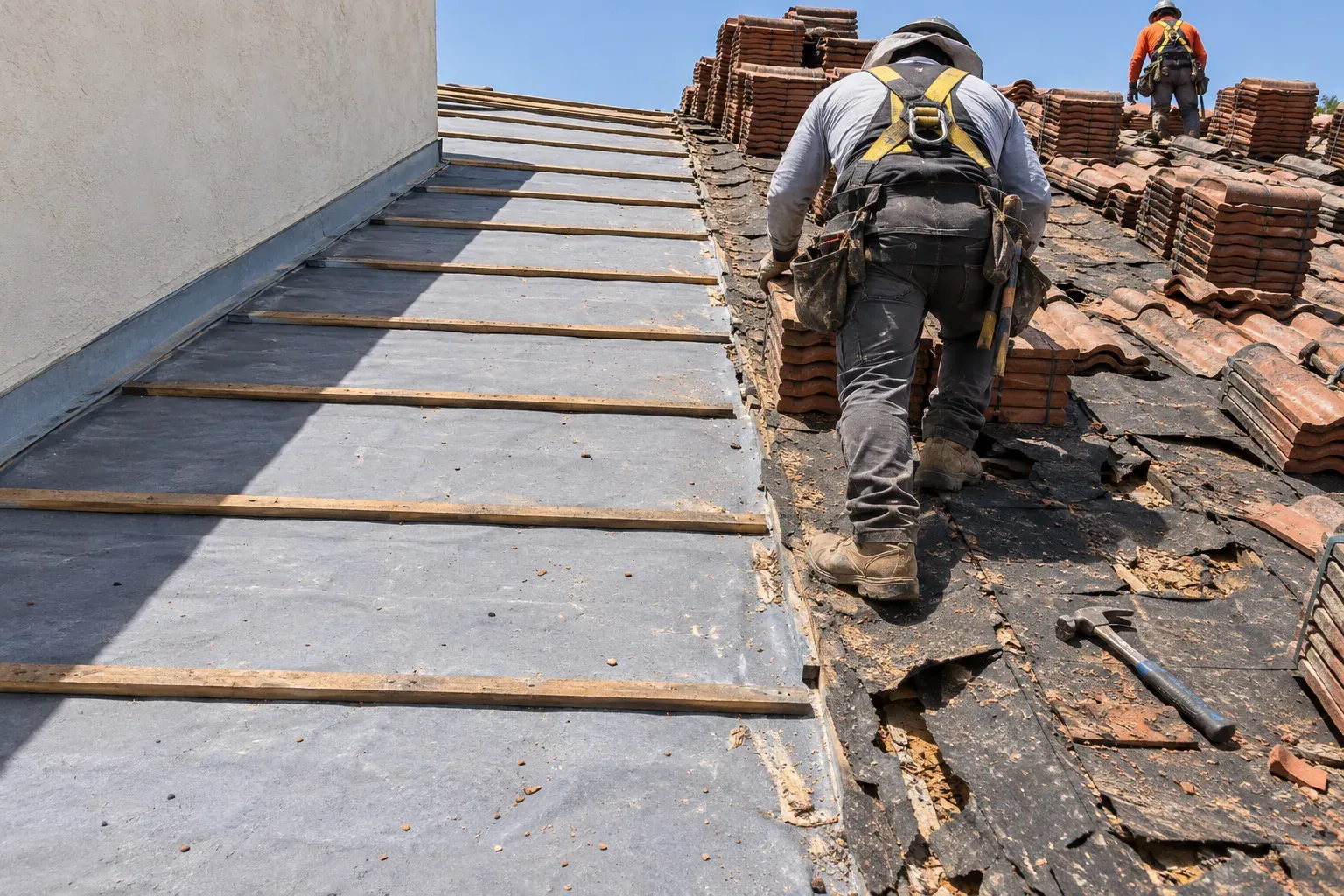
New underlayment and battens beside old torn felt on a tile roof

Tile Roof Underlayment ReplacementLift and Relay, Explained

On most aging tile roofs in LA, the tiles are still fine. It's the layer underneath them, the underlayment, that's failed.

What's happening with your tile roof?

A ZIP code is enough to get started.

Once you have filled it in, one of our contractors will reach out to you ASAP.

  • Free estimates
  • Written line-item quotes
  • Photos of the roof before any work
  • Permits pulled where required

Why Underlayment Fails Before the Tile Does

Clay and concrete tile are built to last decades, but the felt or synthetic layer underneath them is doing the actual waterproofing. Years of LA sun bake and crack it, and by the time it's failing, the tile field on top often still looks intact from the street or a drive-by inspection. Cracked or slipped tiles make it worse, exposing patches of underlayment directly to UV and rain years before the rest of the roof would need it.

That mismatch is why lift and relay exists as its own category of work, distinct from both a simple tile repair and a full tile roof replacement. It treats the actual point of failure, the underlayment, without discarding tile that has plenty of service life left.

The common LA tile profiles, two-piece Mission (barrel) tile, S-tile and flat concrete tile, all sit on top of an underlayment layer rather than sealing the deck directly, so the underlayment is doing all the actual waterproofing work regardless of which profile is on your roof. That's true whether the tile is original 1920s clay or a newer concrete tile installed decades later.

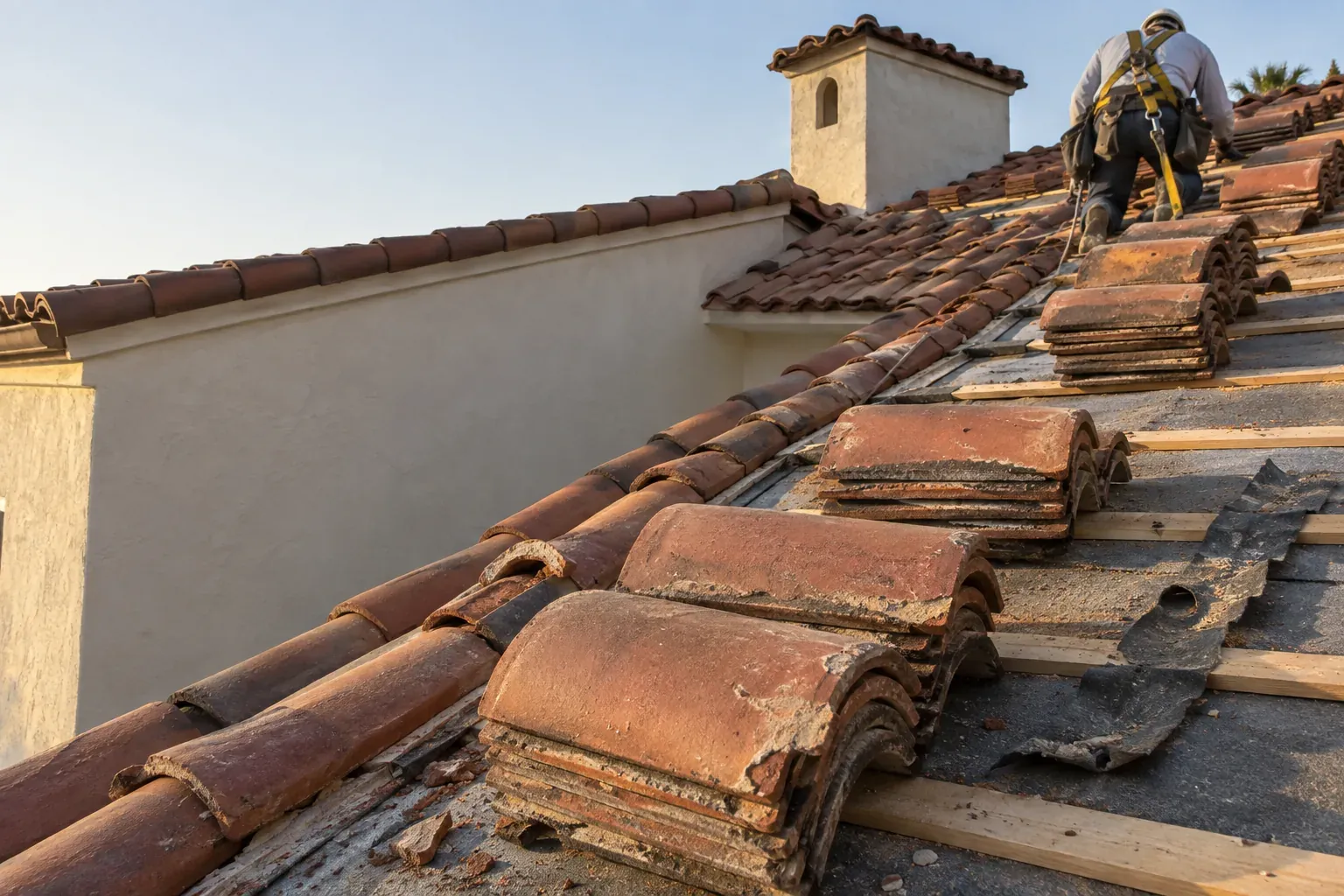
Clay tiles lifted and stacked while new underlayment goes down
Tiles lifted and stacked, exposing the underlayment underneath for replacement.

The Lift-and-Relay Process, Step by Step

  1. Inspect and markThe roof is walked to identify which tiles are cracked or missing and which sections have visible underlayment failure, so the scope reflects the actual roof rather than a guess.
  2. Lift the tilesTiles are removed section by section and stacked, sorted into tiles sound enough to reuse and tiles broken during removal or already damaged.
  3. Strip the old underlaymentThe failed felt or synthetic layer comes off down to the roof deck.
  4. Check the deck and battensAny battens, the wood strips some tile profiles hang from, are inspected and replaced if rotted, along with any soft or water-damaged decking found underneath.
  5. Install new underlaymentNew felt, synthetic or peel-and-stick underlayment goes down, along with new flashing at valleys, walls and penetrations.
  6. Relay the tileThe salvaged tiles go back on in their original pattern, with new matching tile filling in wherever a tile broke or was already missing.
  7. Final checkThe roof is walked again to confirm tiles are properly seated and flashing details are sealed before the job is closed out.

Underlayment Types

TypeMaterials-only costNotes
30# felt~$0.05–$0.60/sq ftTraditional, lowest material cost
Two-ply feltVaries by product; ask for it as a line itemTwo layers for added redundancy under tile
Synthetic underlayment~$0.10–$0.70/sq ftGenerally preferred for durability
Peel-and-stick (self-adhered)Varies by product; ask for it as a line itemSelf-adhered membrane, often used at valleys and vulnerable areas

Materials-only cost ranges: 2026 roofing cost guides (Fixr). Labor is the larger share of a lift-and-relay bill; see cost comparison below.

Cost vs Full Tile Replacement

ProjectTypical cost
Underlayment-only (lift and relay), installed~$3–$6/sq ft
Lift and relay, 2,000 sq ft roof, total~$6,000–$12,000
Lift and relay, Santa Ana, CA example~$5,500–$12,000
Full tile roof replacement, installed~$12–$25/sq ft

Lift-and-relay figures: AZ Roofing Works and Roofing in Santa Ana published cost data (2026). Full tile replacement: published LA cost guides (RoofVista, Silver Hammer Builders). Ranges are a starting point, not a quote for your roof. Roof area is larger than floor area, so price per square foot of roof, not of house. See our roof replacement cost guide for the full breakdown by material.

Tile Breakage & Salvage

A lift-and-relay quote should always include an allowance for tile that breaks during removal or reinstallation. Standard practice is to reuse the existing tiles wherever they survive intact, which matters more than it sounds: many older LA tile profiles are discontinued, so matching salvage tile to what breaks preserves a consistent roof appearance. There is no published standard breakage rate, so ask for the breakage allowance in writing: how many tiles it covers and what each extra replacement tile costs.

Permits: in the City of Los Angeles, reroofing more than 100 sq ft needs a permit. Good news for this job: LADBS lists a lift-and-relay (removing the tiles, installing new underlayment and resetting the same tiles) as an Express Permit item, with no plan check and no cool-roof requirement. A reroof in new clay or concrete tile (6 to 12 lb/sq ft) is different: it's over the Express Permit's 6 lb/sq ft limit and goes through plan check. Other cities and unincorporated county areas have their own building departments.
Not sure if you need a lift and relay or a new tile roof? Send us a note.

Signs You Need It

  • Water stains on ceilings beneath the tile field, even when no tiles are visibly broken.
  • Damp patches, musty smell, or visible daylight in the attic under the tile.
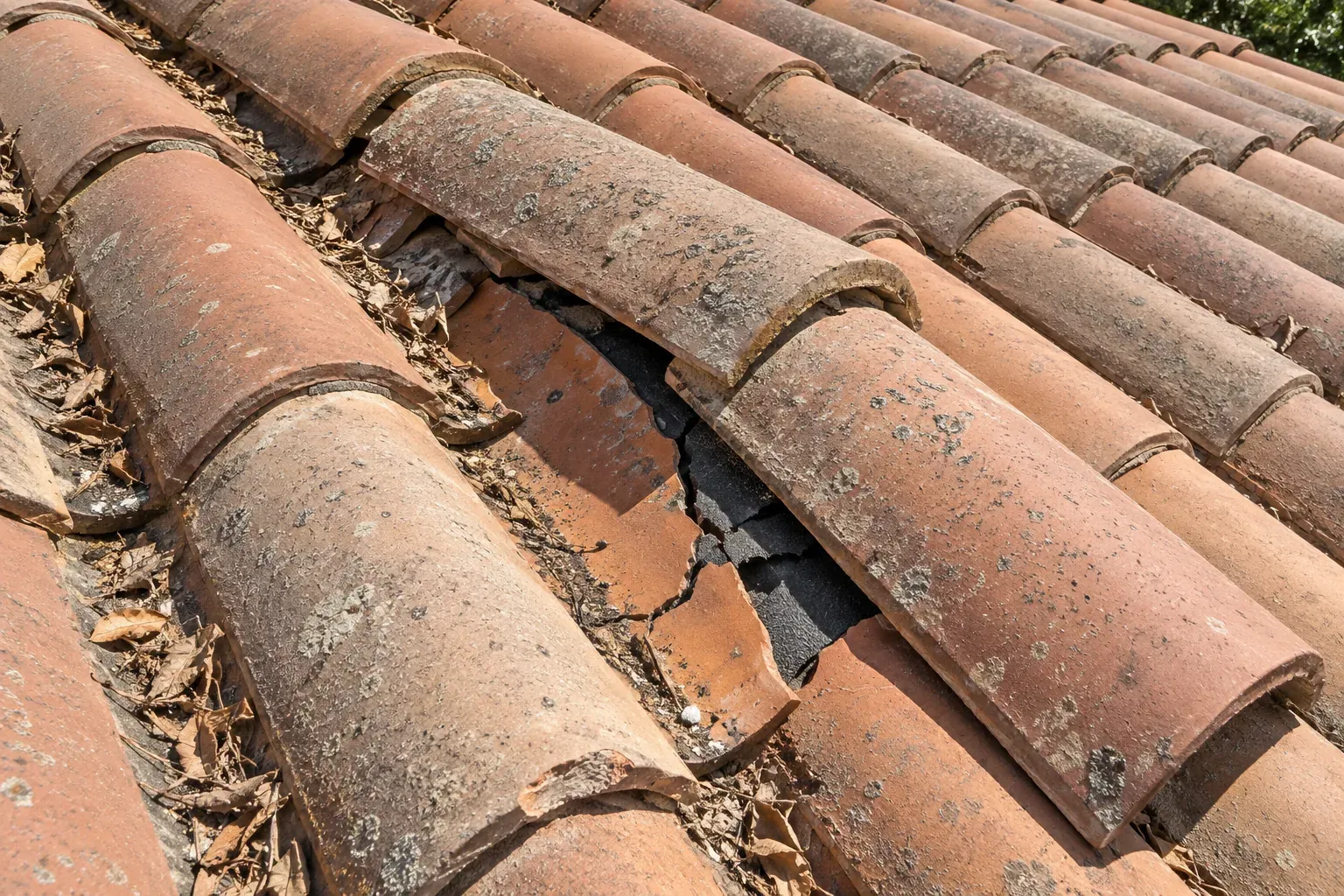
  • Slipped, cracked or missing tiles that expose bare underlayment to sun and rain.
  • A roof age where the felt is decades old, even if the tile itself is original and sound.
  • Repeated small leaks in different spots after rain, rather than one obvious source.

See tile roofing in Los Angeles for full tile roof installation and replacement, or roof repair if you're dealing with an active leak right now. Or send Roofing Los Angeles a note; a proper assessment includes lifting a few tiles and photographing the underlayment underneath.

Slipped and cracked clay tile exposing the underlayment beneath
A slipped, cracked tile exposes the underlayment underneath to direct sun and rain.

Tile Underlayment FAQs

What underlayment types are used under tile roofs?

The most common are 30-pound felt, synthetic underlayment, two-ply felt systems and peel-and-stick (self-adhered) membrane. Felt runs roughly $0.05 to $0.60 per square foot in materials; synthetic runs roughly $0.10 to $0.70 per square foot in materials and is generally preferred for durability.

What's the best underlayment for a tile roof in LA?

Synthetic underlayment is generally preferred for durability over traditional felt, though the right choice also depends on the tile profile, roof pitch and how the roof was originally detailed. A contractor should match the underlayment to your specific tile system rather than defaulting to whatever is cheapest.

How much does it cost to replace tile roof underlayment vs a full tile replacement?

Underlayment-only replacement (lift and relay) runs roughly $3 to $6 per square foot installed, or about $6,000 to $12,000 for a 2,000-square-foot tile roof, plus a breakage allowance; one Santa Ana, CA example quotes $5,500 to $12,000 total for a relay. Full tile roof replacement, tile included, runs substantially higher, roughly $12 to $25 per square foot installed in the LA market.

How long does a tile roof lift and relay take?

A full tile reroof typically takes roughly 6 to 12 days of active installation, and a whole-roof lift and relay involves comparable labor since the tile is fully removed and reinstalled. A section-only job, covering one slope or area, takes less.

Can existing tiles be reused, or do they all break?

Standard practice is to reuse the existing tiles wherever they survive removal intact, especially since many older LA tile profiles are discontinued and hard to match. Some breakage during removal is normal, which is why a lift-and-relay quote should include a breakage replacement allowance. There is no published standard breakage rate, so ask for the allowance in writing.

What are the signs I need my tile roof underlayment replaced?

Water stains on ceilings beneath the tile field, damp patches or visible light in the attic, and tiles that have slipped or cracked and exposed the felt underneath to direct sun and rain. The tiles themselves can look intact from the ground while the underlayment beneath them has already failed.

What is the typical lifespan of tile roof underlayment?

There is no single published lifespan figure for underlayment specifically. What is well established is that the underlayment beneath a tile roof typically fails well before the tile itself does, which is the entire reason lift-and-relay work exists as its own category of project.

Think your underlayment is failing?

Tell us what you're seeing, stains, slipped tiles, an attic that's damp after rain, and roughly your roof's age. A roofer can then tell you whether it's a lift and relay or something smaller.

A ZIP code is enough to get started.

Once you have filled it in, one of our contractors will reach out to you ASAP.

Ask about your roof