Rain Gutters in Los AngelesSizes, Materials & Installed Cost
LA doesn't get much rain, but what falls, falls hard and fast, and a house without working gutters routes all of it straight down the wall, the foundation or the hillside behind it.
LA gets relatively little annual rain, but what falls tends to arrive in short, intense storm cells that dump a lot of water in a few hours rather than a steady drizzle. Without gutters, that water runs straight off the roof edge. On hillside and sloped-lot homes, common across the Santa Monica Mountains, the Verdugos and the Palos Verdes Peninsula (see roofing on the Westside for more on hillside conditions there), fast uncontrolled runoff erodes the slope and can undercut the foundation instead of being routed somewhere useful. On flatter lots, the more visible problem is stucco: water splashing off an unguttered roof edge stains and pits stucco at the base of the wall, storm after storm. This is standard roofing-industry guidance repeated across LA contractor sources, and it's the reason gutters matter here even in a low-rainfall climate. See Best LA Roofing's cost guide for more on the pattern.
Gutter Types, Sizes and Materials
K-Style vs. Half-Round
K-style is the standard profile on most LA homes: a flat back that mounts flush to the fascia, with a decorative face that reads like crown molding from the ground. Half-round is the traditional, curved profile, most often specified in copper on older or higher-end homes where the look matters as much as the function.
Sizing: 5-Inch vs. 6-Inch
Most LA homes run 5-inch K-style gutter. Larger roof planes, two-story sections, or valleys that concentrate a lot of runoff in one place often call for 6-inch K-style, or a larger downspout, to keep up during one of LA's short, intense storm cells instead of overflowing at the corners.
Seamless Aluminum
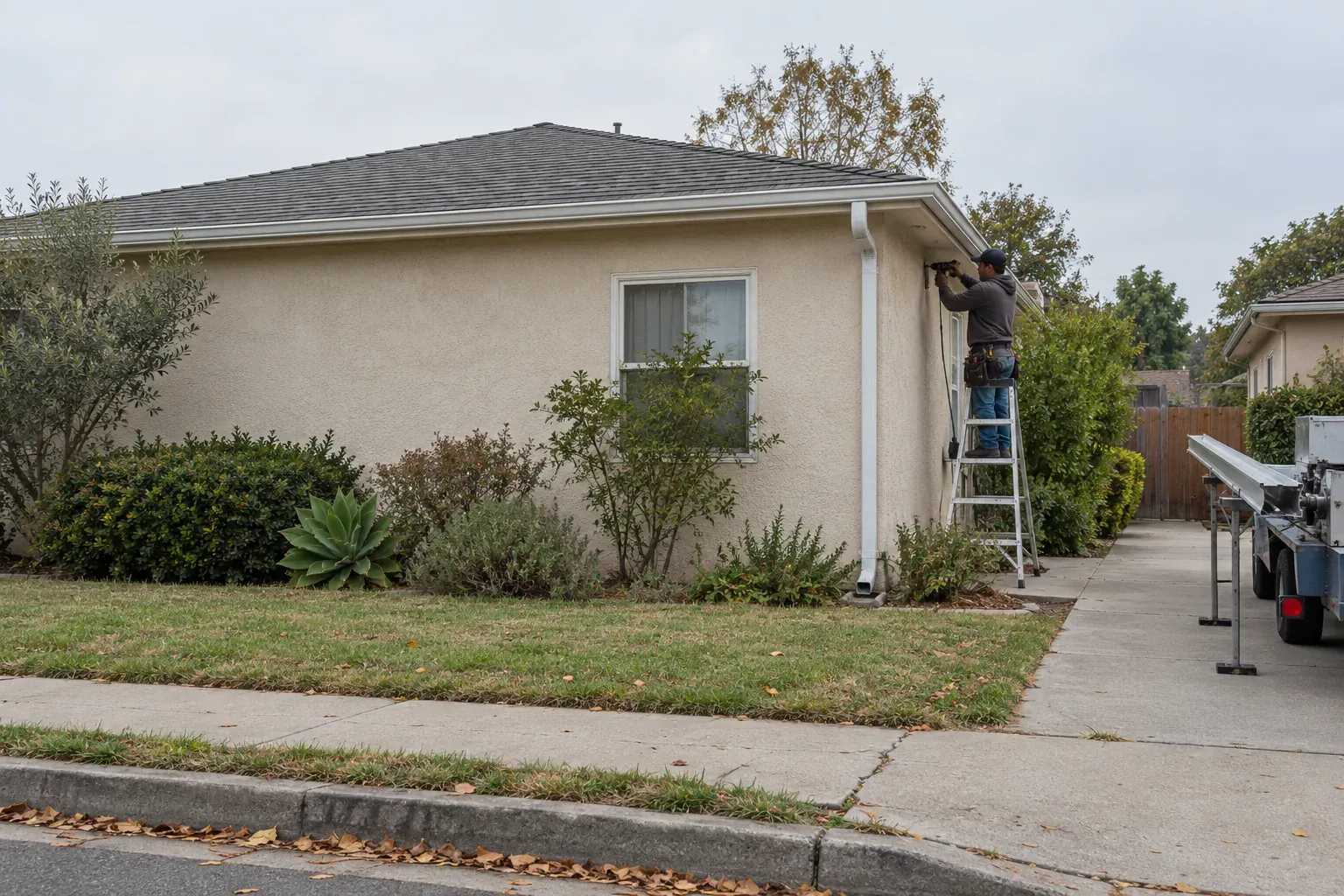
The most common material in LA: formed on-site from a coil so there are no seams along the run to leak or corrode, available in a wide range of colors, and the lowest installed cost per foot of the standard options.
Steel, Zinc and Copper
Steel holds up well under falling debris but can rust at cut edges over time. Zinc develops a protective patina and lasts a long time without painting. Copper is the premium option, priced well above the others, and is usually chosen for its look and longevity on older or architecturally significant homes as much as for performance.
Material
Installed, per linear ft
Seamless aluminum
~$6–$12
Seamless steel
~$8–$15
Seamless zinc
~$20–$35
Copper half-round
~$30–$74 (sources vary on the top end)
Ranges reported by 2026 cost guides (Angi, LA-specific; copper figures per Northstar Gutter and Copper Gutter Supply Co., who disagree on the ceiling price). A typical LA home needs 150–200 ft of gutter; the citywide average for a seamless aluminum project is about $1,306 ($1,022–$1,590), with a full run commonly landing around $900–$2,400.
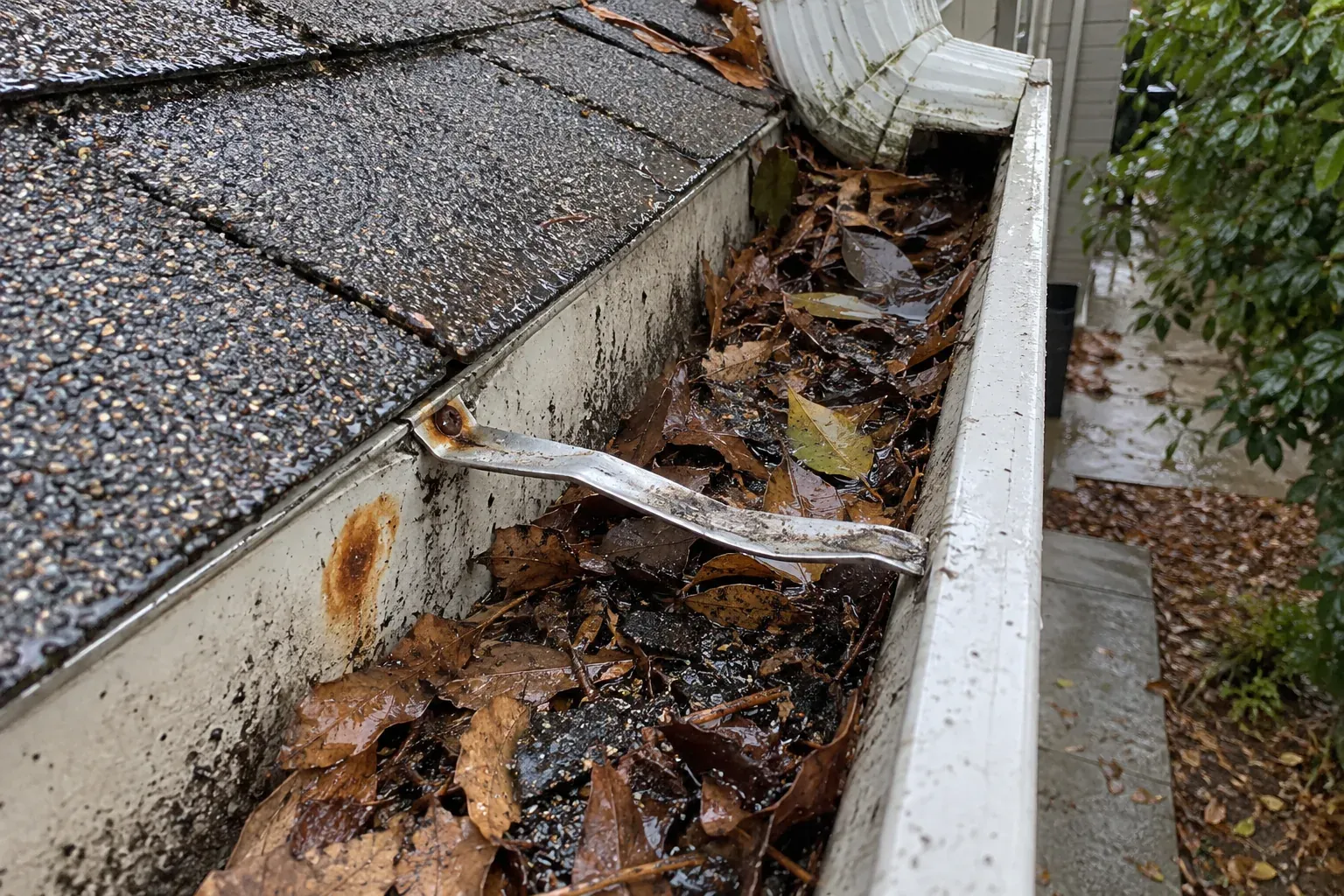
Leaves and shingle granules collecting in the gutter. Granules are often the first visible sign a shingle roof is aging.
Gutter Guards and Downspouts
Guards keep leaves and debris out of the trough so water keeps moving instead of backing up under the roof edge. They're most worth it under trees or near hillside brush; a clean run on a simple roof may not need them at all. Downspouts move water from the gutter to the ground or a drain, and sizing them to the roof area they're draining matters as much as sizing the gutter itself.
Ready to get your gutters sized and priced for your roof? Send the form and a contractor will reach out ASAP to talk through the material, size and linear footage that fits your house.
Guard type
Installed, per linear ft
General range
~$6–$20
Micro-mesh
~$9 (typical average)
Premium branded systems
~$13–$38
Ranges reported by HomeGuide and This Old House (2026).
Gutters and LA Stormwater Rules
LA's Runoff Rules
The City of Los Angeles' Low Impact Development (LID) Ordinance requires new development and major redevelopment to route roof and driveway runoff toward pervious landscaped areas or on-site infiltration rather than straight to the storm drain. It mainly affects new construction and larger remodels, not a straightforward gutter replacement, but it's worth knowing if a downspout reroute is part of a bigger project; see our guide to roofing permits in Los Angeles for how that fits with a reroof.
Rain Barrel & Cistern Rebates
LADWP runs a rebate program for rain barrels and cisterns that capture roof runoff, through the regional SoCal Water$mart program with the Metropolitan Water District. Rebate amounts change, so check the current figure on LADWP's own rebate page before you buy.
Gutters and the Roof Edge
A gutter only works as well as what feeds it. Drip edge, the strip of metal installed along the roof's eave, is what actually directs water off the roof deck and into the gutter instead of behind it and down the fascia board. Fascia is the board gutters are hung from; if it's rotted, or the drip edge is missing or damaged, no amount of gutter capacity fixes the leak behind it. A proper gutter quote checks the drip edge and fascia at the same time, since hanging new gutters on a compromised edge just moves the problem. See roof repair in Los Angeles if the fascia or roof edge itself needs work first, or Roofing Los Angeles if the roof surface is due for more than a repair. The parts of a roof guide shows where the fascia, soffit and drip edge sit.
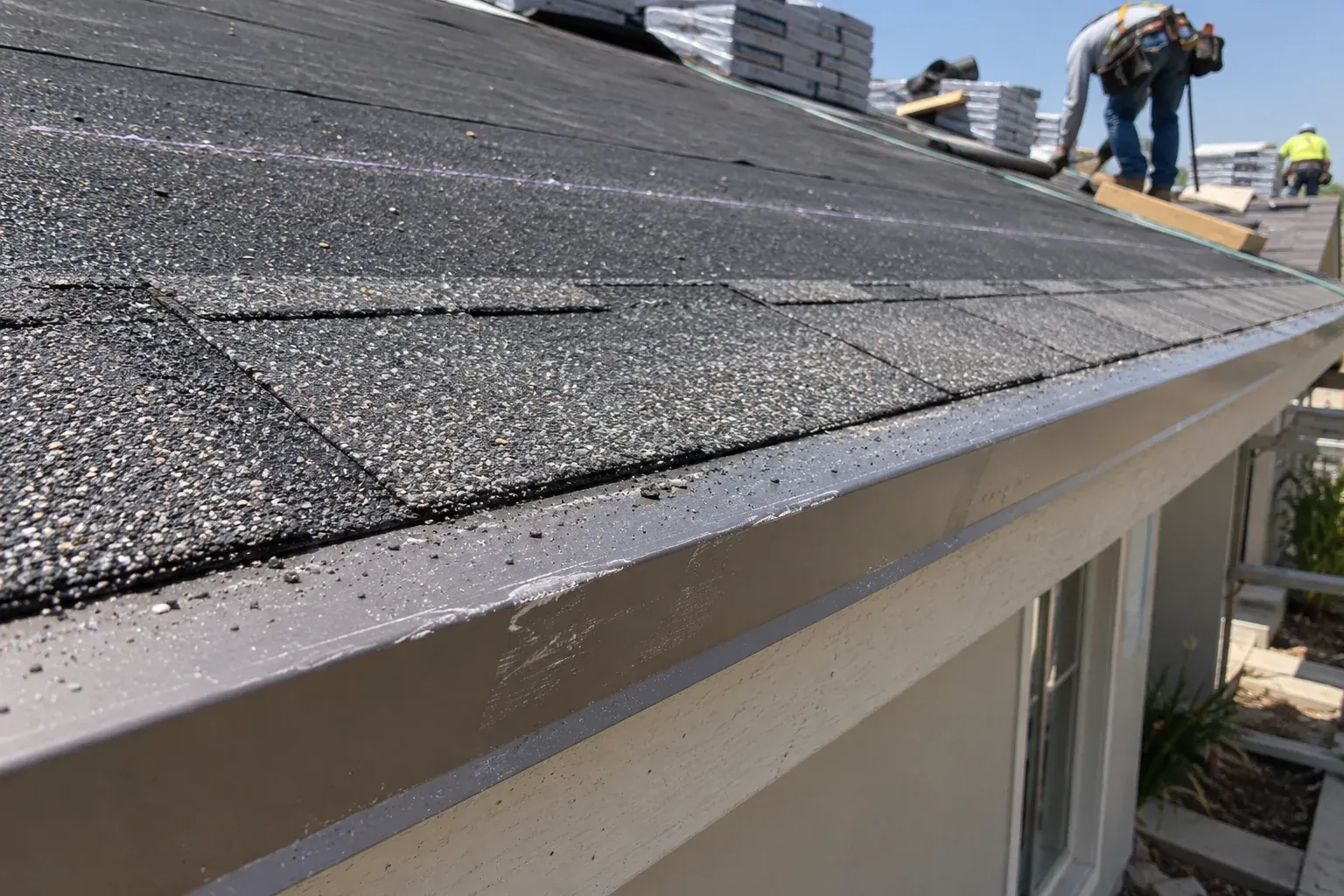
Metal drip edge installed along the eave, directing water into the gutter below.
Red Flags
Signs Your Gutters Need Attention
Gutters pulling away from the fascia, sagging sections holding water instead of draining, granules from an aging shingle roof collecting in the trough, staining or splash-back on the stucco below a section, and water pooling at the foundation after a storm. Any of these means the gutters, or what they're attached to, need a look before the next storm rolls through.
Gutter FAQs
Are rain gutters necessary in California?
California doesn't have a blanket law requiring gutters on every home, but in Los Angeles the short, intense storms typical of the rainy season, plus hillside lots and stucco exteriors, make them worth having. Without gutters, runoff erodes slopes, stains stucco and can pool at the foundation.
Does California building code require gutters?
Not universally for existing single-family homes. New development and major redevelopment in the City of Los Angeles fall under the Low Impact Development Ordinance, which requires routing roof runoff to pervious areas rather than mandating gutters specifically, so requirements depend on the scope of the project.
Is it okay for a house to not have gutters?
It's common on some homes, especially those with wide overhangs on a flat, stable lot. But on a hillside lot or a home with stucco close to grade, skipping gutters usually means more erosion and staining over time, not less maintenance.
How much does gutter installation cost in Los Angeles?
Seamless aluminum runs about $6 to $12 per linear foot installed in LA. A typical home needs 150 to 200 feet, which lands the full job around $900 to $2,400; the citywide average for a seamless aluminum project is about $1,306. Steel, zinc and copper cost more per foot.
What size gutter does my house need?
Most LA homes use 5-inch K-style gutter. Larger roof planes, two-story sections, or valleys that concentrate a lot of runoff in one place often call for 6-inch K-style or a larger downspout to keep up during a short, intense storm.
Can I install gutters myself?
A short downspout repair is within reach for some homeowners, but pitching a seamless run correctly, especially tied into a two-story fascia or a hillside lot, is easy to get wrong in a way that shows up as pooling or fascia rot later. Seamless gutters are formed on-site by a machine, which isn't a retail DIY option.
How much does a gutter guard cost?
Guards typically run $6 to $20 per linear foot installed depending on the type. Micro-mesh guards average around $9 per foot, while premium branded systems run roughly $13 to $38 per foot.
Ready for gutters that actually keep up with an LA storm?
Tell us the roof type, roughly how many stories, and what's going on now (nothing installed, a repair, or a full replacement). The quote should give a material and size recommendation with the per-foot price in writing.