Zone 9, in Short
Steep-slope tile and shingle: a cool-roof-rated product is generally required on a reroof. Flat and low-slope sections, including ADU roofs: cool-roof rules apply too.
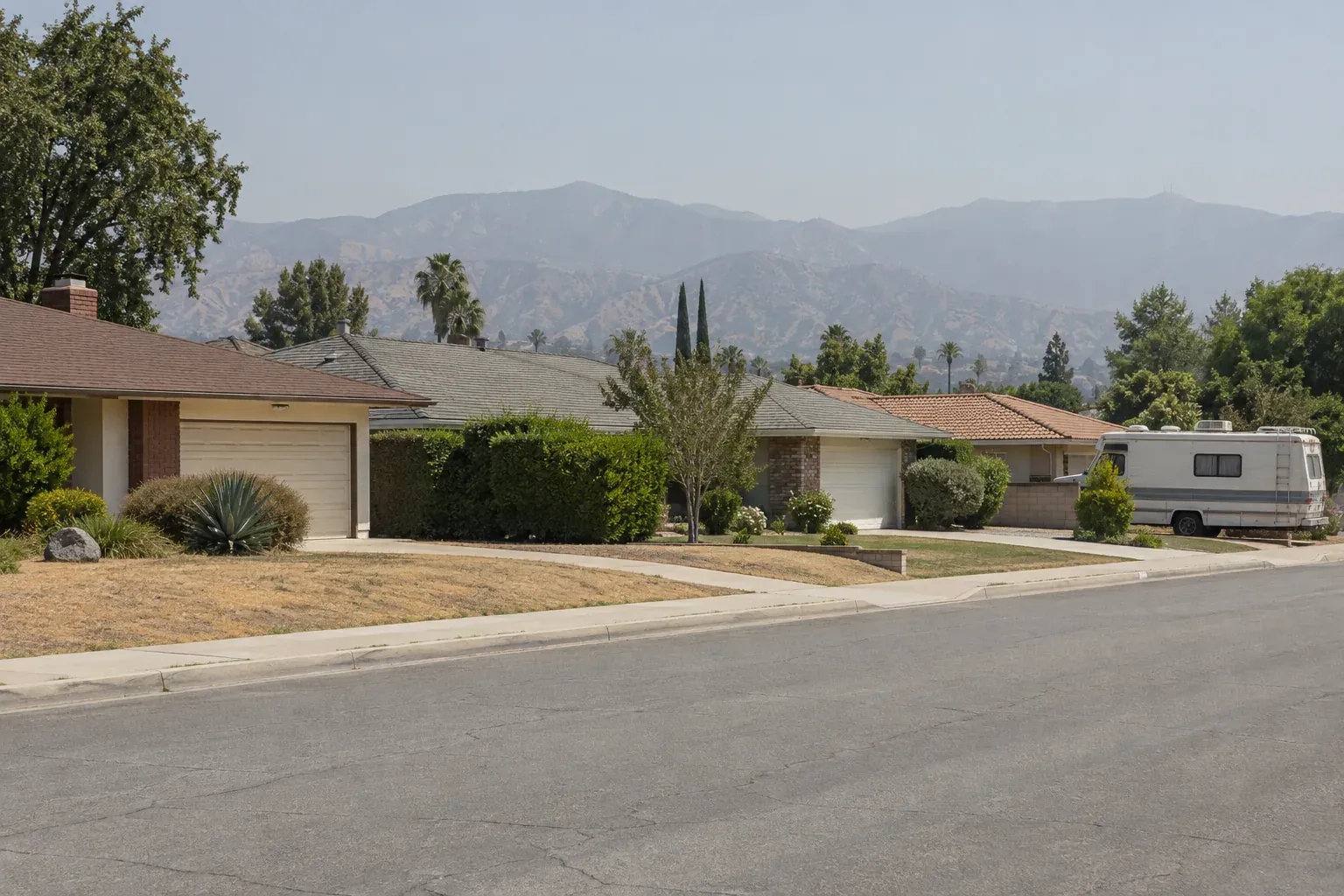
Valley summers run hotter than the coast, which is hard on shingles and on the underlayment beneath tile. Most of the Valley is Title 24 zone 9, so the cool-roof rule for steep-slope roofs applies.
What's going on with your Valley roof?
The Valley sits inland, away from the marine layer that cools the coast, so it runs hotter and drier for more of the year. Most of the Valley falls in Title 24 Climate Zone 9, separate from coastal zone 6 and the South/East LA zone 8. That extra heat and UV is hard on roofing materials: shingles dry out and curl faster, and the underlayment beneath tile breaks down from the inside while the tiles on top still look fine.
Zone 9 is covered by the state's steep-slope residential cool-roof rule (zones 4 and 8–15), so a tile or shingle reroof here generally needs a cool-roof-rated product or a code-allowed alternative, such as added ceiling insulation. Flat and low-slope sections, including ADUs, fall under the separate low-slope rule, which also applies in zone 9. See the Title 24 cool roof guide for the full rule set and the LADWP rebate.
Steep-slope tile and shingle: a cool-roof-rated product is generally required on a reroof. Flat and low-slope sections, including ADU roofs: cool-roof rules apply too.
Climate zone boundaries and cool-roof rule applicability: Cool Roof Rating Council, California Title 24 summary (2025 Energy Code; reroof values unchanged from 2022); zone by zip via the SoCalREN Climate Zone Directory (source: California Energy Commission).
Sherman Oaks, Van Nuys, Encino, Studio City, North Hollywood, Reseda and Northridge are within the City of Los Angeles, so permits go through the LADBS Van Nuys Development Services Center, 6262 Van Nuys Blvd. See our permits guide for what typically needs one.
Burbank is its own incorporated city with its own building department. Reroofs there typically qualify as a Simple Permit, handled over the counter or online through Burbank Community Development, Building & Safety, rather than through LADBS.
Much of the Valley was built out in the mid-20th century as single-family tracts, roofed in composition shingle or, on some tracts, clay or concrete tile. Shingle lasts about 20 to 30 years for 3-tab and 30 to 45 for architectural, so age alone tells you a lot about what a roof has left.
A tile main roof often sits beside a shingle or flat section over a later addition, since tile wasn't always extended when a house was expanded. Each material ages differently, so an inspection has to check both.
Room additions, garage conversions and backyard ADUs are common across the Valley, and most use a low-slope membrane or coating rather than matching the main roof. These sections need their own drainage and flashing check.
Heat and UV damage tends to spread across a whole slope rather than staying in one spot, which is a useful tell:
If most of these don't apply, a targeted repair is usually enough; our repair-or-replace guide walks through the decision in more detail. Send the form with photos of the roof if you have them.
Hillside neighborhoods along the Santa Monica Mountains side of the Valley, near the Sepulveda Pass, fall inside Very High Fire Hazard Severity Zones under CAL FIRE's updated 2025 maps, which requires a Class A fire-rated roof assembly there.
Fire hazard zone mapping: CAL FIRE 2025 updated maps, as reported by LAist; confirm any specific address with the CAL FIRE OSFM map viewer.
For Valley neighborhoods inside the City of LA, yes, for LADWP electric customers. Burbank homes are served by Burbank Water and Power and aren't eligible. The Title 24 guide has the rebate terms.
LA's wet season runs roughly November through April, wettest in February. May through October is the practical reroofing window. Tile costs more to repair or replace than shingle, because lifting and relaying it takes more labor; the roof replacement cost guide has the ranges. See how long a roof lasts by material, or visit Roofing Los Angeles for options beyond the Valley.
It depends which city you're in. For Sherman Oaks, Van Nuys, Encino, Studio City, North Hollywood, Reseda, Northridge and the rest of the Valley within the City of Los Angeles, permits go through LADBS's Van Nuys Development Services Center. Burbank is its own city, so a Burbank reroof is permitted through Burbank Community Development instead, where most reroofs qualify as a Simple Permit handled over the counter or online.
Yes, in one specific way. Most of the Valley sits in Title 24 Climate Zone 9. The state's steep-slope residential cool-roof rule applies in Climate Zones 4 and 8 through 15, which includes zone 9, so a tile or shingle reroof in the Valley generally needs a cool-roof-rated product (or a code-allowed alternative such as added insulation). The low-slope residential rule, which covers flat sections and additions, applies in zone 9 as well.
Hillside areas along the Santa Monica Mountains side of the Valley, near the Sepulveda Pass, fall inside Very High Fire Hazard Severity Zones under CAL FIRE's updated 2025 maps, and roofs in those zones must be Class A. Flat valley-floor neighborhoods such as Van Nuys and North Hollywood generally aren't in those zones. Confirm any address on the CAL FIRE map viewer.
Only for LADWP electric customers, which covers the Valley neighborhoods inside the City of LA, such as Sherman Oaks, Van Nuys and North Hollywood. Burbank is served by Burbank Water and Power, which runs its own programs. The Title 24 guide on this site has the rebate terms.
Three neighborhoods of the City of Los Angeles, plus Burbank, which has its own building department.
Tell us the neighborhood, the roof type if you know it, and what you're seeing.