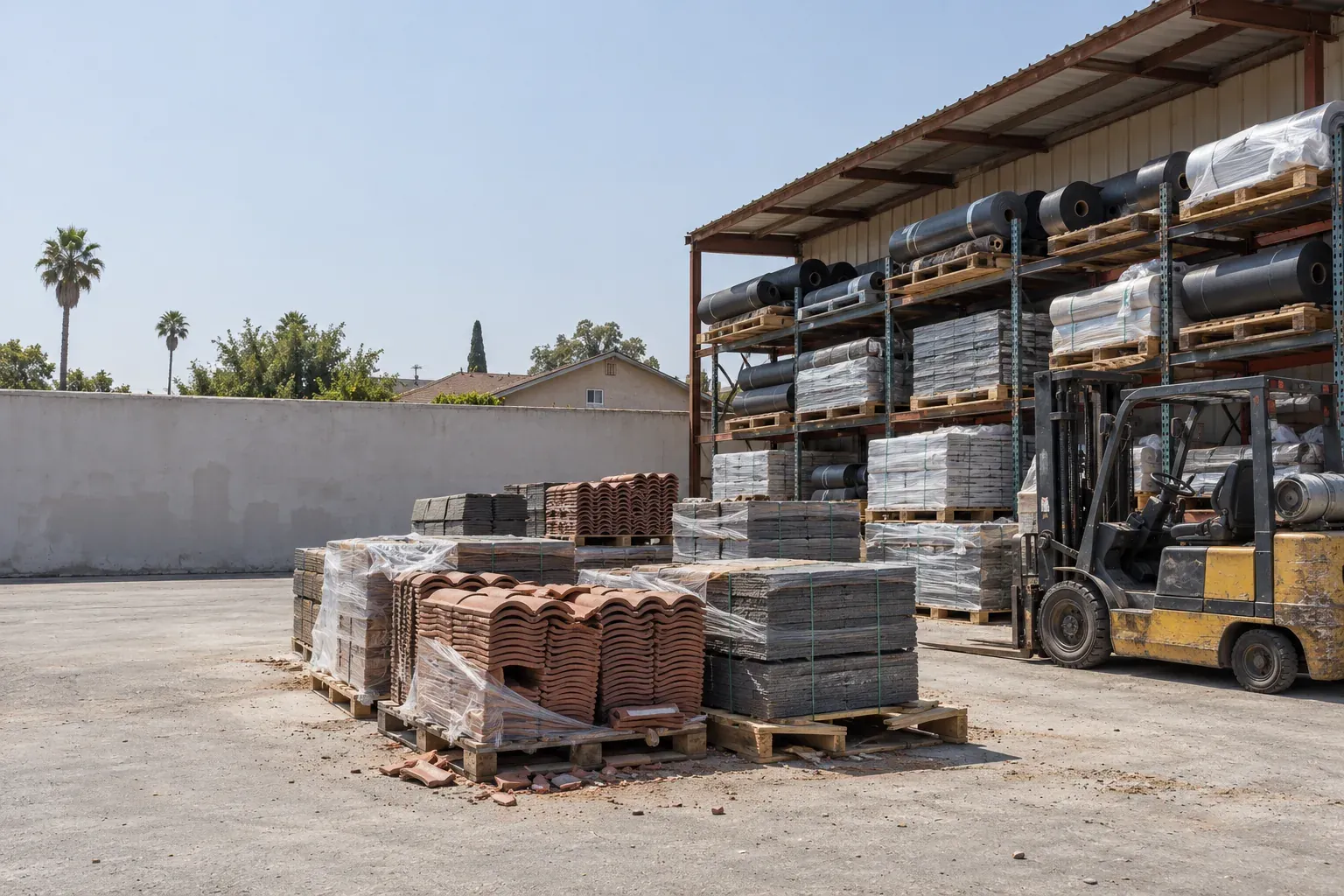
Best Roofing Material for Southern CaliforniaWhat Actually Holds Up Here
Southern California is hard on roofs in ways most national buying guides don't cover: months of direct UV, Santa Ana wind gusts, salt air near the coast, and in the hills, a fire code that rules some materials out entirely.
What material is on your roof now?
- Free estimates
- Written line-item quotes
- Photos of the roof before any work
- Permits pulled where required
Roofing Material Comparison for Southern California
These are published cost and lifespan ranges, not a quote for your roof. Asphalt and tile costs are Los Angeles ranges; metal and flat costs are national ranges, because no LA-specific figures are published. Actual pricing depends on roof pitch, access, tear-off scope and the specific product line.
| Material | Installed cost | Lifespan | Weight | Fire class | Cool-roof options | Best for |
|---|---|---|---|---|---|---|
| Asphalt shingle | ~$6.50–$15.20/sq ft (LA) | 3-tab 20–30 yrs; architectural 30–45 yrs (premium lines at the top) | Among the lightest common options | Class A achievable by assembly | CRRC-rated cool shingles available | Lowest upfront cost, most roof shapes |
| Clay tile | ~$12–$25/sq ft (LA, tile combined) | 50–100+ yrs (the tile; underlayment needs replacing sooner) | 6–10 lb/sq ft | Class A commonly cited | CRRC-rated tile products available | Spanish/Mediterranean homes, long ownership |
| Concrete tile | ~$12–$25/sq ft (LA, tile combined) | 40–100 yrs | 9–12 lb/sq ft (lightweight formulations at 6–7 lb/sq ft exist) | Class A commonly cited | CRRC-rated tile products available | Tile look at lower material cost than clay |
| Metal / standing seam | ~$10–$20/sq ft residential (national range) | Steel 40–60 yrs; aluminum 50–80 yrs | Substantially lighter than tile | Non-combustible; commonly Class A rated (check the product's listing) | PVDF/Kynar-type reflective finishes common | Fire zones, coastal properties, steep pitches |
| Flat: torch-down / mod bit | ~$4–$9/sq ft (national range) | 15–25 yrs | Moderate (multi-layer) | Assembly-dependent; confirm with manufacturer | Reflective cap sheets available | Low-slope additions, ADUs, older flat sections |
| Flat: TPO | ~$4–$9.50/sq ft (national range) | 15–25 yrs | Light, single-ply membrane | Assembly-dependent; confirm with manufacturer | Light-colored, cool-roof-rated versions common | New flat sections, additions, garages |
| Flat: spray foam (SPF) | ~$5–$10/sq ft (national range) | Needs periodic recoating; ask for the coating warranty term | Seamless, sprayed-on | Assembly-dependent; confirm with manufacturer | Elastomeric coatings often reflective | Irregular flat roofs, roofs with many penetrations |
Cost, lifespan and weight figures: published 2026 cost guides and Cedur clay/concrete tile data, cross-checked in our roof replacement cost guide. Fire class: Placer County and up.codes CBC Chapter 7A summaries. Treat ranges as a starting point, not a quote.
The Materials, One at a Time
Asphalt Shingle
The most common roofing material in Los Angeles and the lowest-cost way to meet code. 3-tab shingles are the cheapest tier; architectural (dimensional) shingles cost more but carry higher wind ratings and longer warranties. Both can reach a Class A fire rating when installed over the correct underlayment assembly. See shingle roofing in Los Angeles for installation details. If you're unsure which material suits your house, send Roofing Los Angeles a note and a roofer can go through the options with you.
Clay & Concrete Tile
Tile is the material most associated with LA's Spanish and Mediterranean-style housing stock, and it's the longest-lived option on this list. The tile itself rarely fails; it's the underlayment beneath it that wears out first, usually well before the tile does. Concrete tile costs less than clay per unit but weighs roughly 40% more, which matters on older framing. See tile roofing in Los Angeles and, if your tile roof is leaking despite sound tiles, our guide to tile roof underlayment replacement.
Metal & Standing Seam
Metal roofing is non-combustible and is commonly Class A rated (the rating applies to the tested assembly, so check the product's listing), which makes it a common choice in fire hazard zones. It's also dramatically lighter than tile, so it doesn't force a structural upgrade the way heavy concrete tile can. Two persistent myths are worth retiring: a properly installed metal roof with solid decking and underlayment isn't louder in rain than asphalt, and metal doesn't attract lightning more than any other roofing material. See metal roofing in Los Angeles.
Flat Roof Systems: Torch-Down, TPO & Foam
Flat and low-slope sections are common on additions, ADUs, garages and the many mid-century LA homes with a flat wing. Torch-down (modified bitumen) is the traditional choice on older flat roofs; TPO is a lighter-colored, heat-welded membrane increasingly used on new low-slope work; spray polyurethane foam (SPF) goes on as a liquid and suits roofs with irregular shapes or many penetrations. See flat roofing in Los Angeles and cool roofs and coatings for the reflective finish options on each.
Slate & Wood Shake, Briefly
Both appear occasionally on older LA homes but aren't a common recommendation today. Wood shake in particular is a fire concern: wood shake shingle roofs generally do not qualify for the Class A fire-rated designation that most insurers and fire-zone rules look for, which limits it in the hillside and canyon areas where LA's fire hazard zones sit.
Choosing by LA Factors
The "best" material changes once you weight it against where the roof actually sits. These are the factors that matter most in LA County.
- Fire hazard zone. Roofs in a Fire Hazard Severity Zone, including Very High, need a Class A assembly. CAL FIRE's 2025 map update expanded VHFHSZ coverage around the Santa Monica Mountains, the Sepulveda Pass and into Glendale, so a property that wasn't in a fire zone before may be now. Tile, concrete tile and metal are the materials most commonly cited as meeting Class A; wood shake generally doesn't.
- Heat and UV. Valley areas (climate zone 9, San Fernando Valley) see more sustained heat than the coast. Reflective, cool-roof-rated finishes on shingle, tile or metal cut down on attic heat gain and are required by Title 24 on many reroofs; see our Title 24 cool roof guide.
- Coastal salt air. Homes near the coast (climate zone 6, Westside and South Bay) deal with marine-layer moisture and salt air which are generally understood to age metal flashing and fasteners faster near the coast. Marine-grade fasteners and coated metal matter more here.
- Roof structure weight. Standard California framing typically carries clay tile without modification, but heavier concrete tile can require structural reinforcement. If you're switching from shingle to a heavier tile at replacement, have the framing checked before you commit to a material.
- HOA and historic districts. Some communities layer an architectural review on top of city permitting. On the Palos Verdes Peninsula, for example, the Palos Verdes Homes Association's Art Jury has independent authority over the exterior appearance of re-roofing, separate from the city's own permit. Check your HOA or historic-district rules before ordering material.
- Title 24. Many reroofs trigger a cool-roof requirement, depending on building type, roof slope and climate zone (LA's zones are 6, 8 and 9); a steep-slope single-family reroof in coastal zone 6 has none. Where it applies, it affects the finish you can use on shingle, tile, metal and flat systems alike. See the Title 24 guide for the numbers by building type and zone.
Not sure which material fits your roof's structure, fire zone and budget? Send us a note before you decide.
Roofing Materials FAQs
What is the best roofing material for Southern California?
There isn't one answer for every roof. Clay and concrete tile suit the region's Spanish and Mediterranean-style homes and last the longest, metal performs well on fire-zone and coastal properties, and asphalt shingle is the lowest-cost option that still meets code. The right choice depends on your roof's structure, its fire zone, and your budget.
Which roofing material lasts the longest?
Clay tile, typically 50 to 100+ years for the tile itself (the underlayment beneath needs replacing much sooner). Concrete tile is close behind at roughly 40 to 100 years, with steel roofing around 40 to 60 years and aluminum 50 to 80. Asphalt shingle is shortest-lived among the common options: 20 to 30 years for 3-tab and 30 to 45 for architectural shingles.
What roofing material works best in a fire hazard zone?
Concrete tile, clay tile and metal roofing are the materials most commonly cited as meeting the Class A fire-rated assembly required in Very High Fire Hazard Severity Zones. Metal is non-combustible and commonly Class A rated (check the product's listing); tile assemblies typically reach Class A with the correct underlayment. Wood shake shingle roofs generally do not qualify as Class A.
Is a clay tile roof fire-resistant?
Yes. Clay tile is one of the materials commonly cited as qualifying for the Class A fire-rated roofing designation, along with concrete tile and metal. The tile itself is non-combustible; the assembly beneath it (underlayment, decking) also has to meet code for the roof to carry a Class A rating.
What is the least expensive roofing material?
Asphalt shingle is the lowest-cost common option, with published Los Angeles installed ranges running roughly $6.50 to $15.20 per square foot depending on the shingle grade. Clay and concrete tile run higher, roughly $12 to $25 per square foot installed, largely because of the added labor.
What is the best time of year for roof replacement in LA?
Late spring through fall, outside the wet season. Los Angeles gets about 92% of its annual rain between November and April, with February typically the wettest month, so scheduling a tear-off during the May to October dry stretch reduces the chance of weather delays.
Do heavier roofing materials need a structural check first?
Concrete tile is worth checking. It weighs roughly 9 to 12 pounds per square foot, about 40% heavier than clay tile's 6 to 10 pounds per square foot, and standard framing that carries clay tile without modification may need reinforcement for standard-weight concrete tile. Lightweight concrete tile formulations exist for roofs that can't take the extra load.
Not sure where your roof stands?
Tell us your roof type and what you're weighing, tile, metal, shingle or a flat section, and a roofer can go through what your structure, fire zone and budget actually support before you buy material.