3-tab is flat and uniform, and the budget choice. Architectural (dimensional) shingles are layered for shadow lines and depth, hold up better in wind, and are what most LA re-roofs use today. Designer lines mimic shake or slate for a premium look. See how shingle stacks up against tile, metal and flat roofing in our guide to the best roofing materials for Southern California.
Fire Rating
Both 3-tab and architectural shingles can reach a Class A fire rating when installed over the correct underlayment assembly, and designer lines carry UL Class A ratings as well. The rating is a property of the whole assembly as installed, not the shingle package alone, so underlayment choice and installation details matter for a fire-zone property.
Wind Rating
3-tab shingles are typically rated around 60 mph, while architectural shingles carry 110 to 130 mph ratings, with premium lines up to 150 mph. In a Santa Ana wind event, that difference is the gap between a shingle that lifts and one that doesn't.
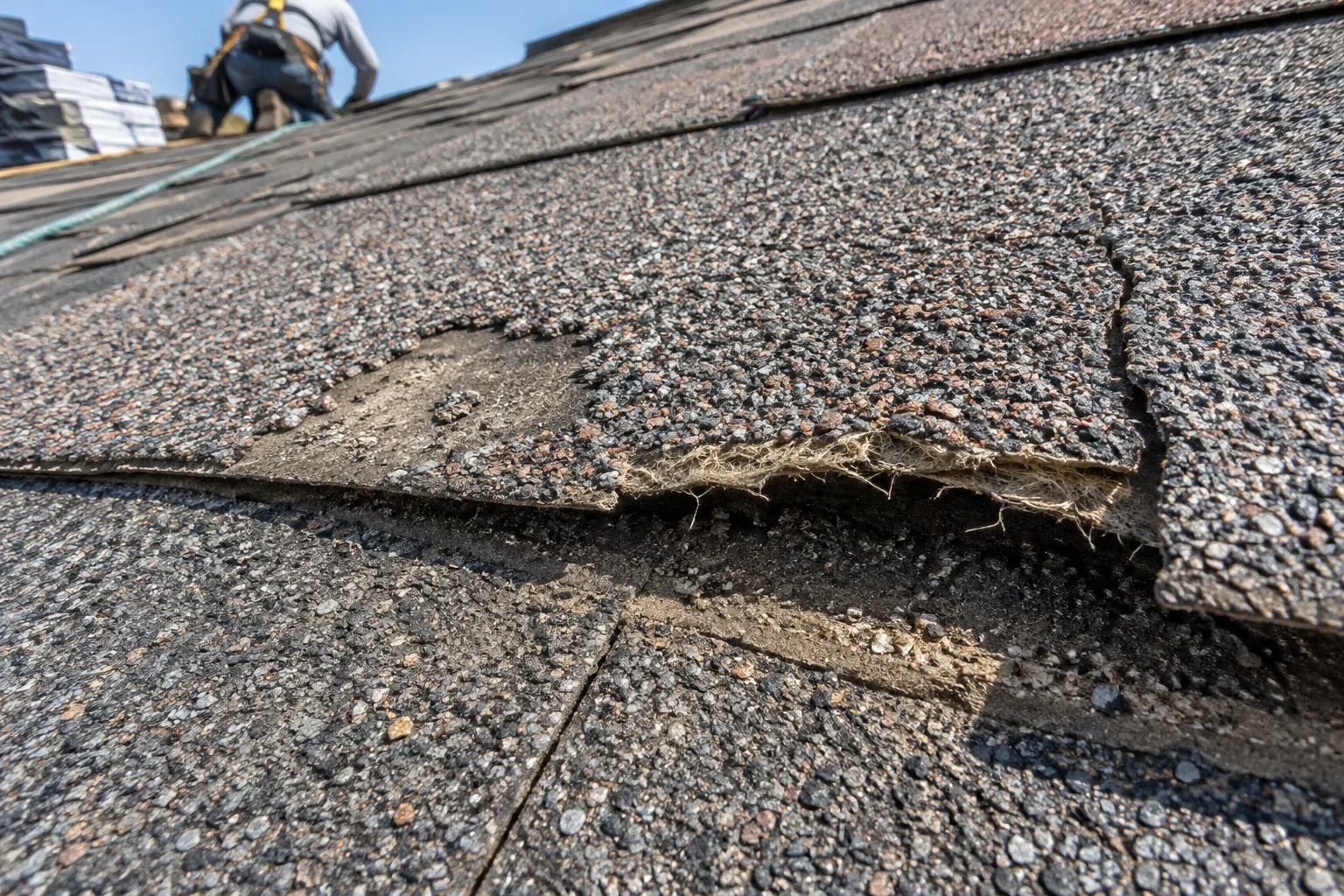
Curled or cupped tabs. Corners lifting away from the roof deck, usually from years of UV exposure.
Bald patches. Granules worn away, exposing the black asphalt mat underneath.
Granules collecting in the gutters after every rain, a sign the shingles are shedding their protective surface.
Missing shingles or exposed nail heads after a Santa Ana wind event.
Dark streaking from algae growth, mostly cosmetic but worth noting on an older roof.
Curled corners and granule loss are early signs a shingle roof is nearing the end of its service life.
Cool-Rated Shingles and Title 24
Whether a cool-rated shingle is required depends on your climate zone, not just the fact that it's a shingle roof. Under Title 24 (the 2025 Energy Code applies to permits applied for since January 1, 2026, and the reroof values are unchanged from 2022), residential steep-slope reroofs — the category shingle roofs fall into — require a cool roof in Climate Zones 4 and 8 through 15. That covers the San Fernando Valley (Zone 9) and South and East LA (Zone 8), but not coastal LA (Zone 6), where the steep-slope rule doesn't apply. Qualifying products carry a CRRC label showing initial and aged solar reflectance and thermal emittance, verified through the CRRC Rated Roof Products Directory. Confirm your exact zone and the current numeric thresholds with your contractor at permit time; the California Energy Commission's climate-zone lookup is the authority for any parcel. For flat sections, cool-roof rules apply more broadly; see our Title 24 cool roof rules guide.
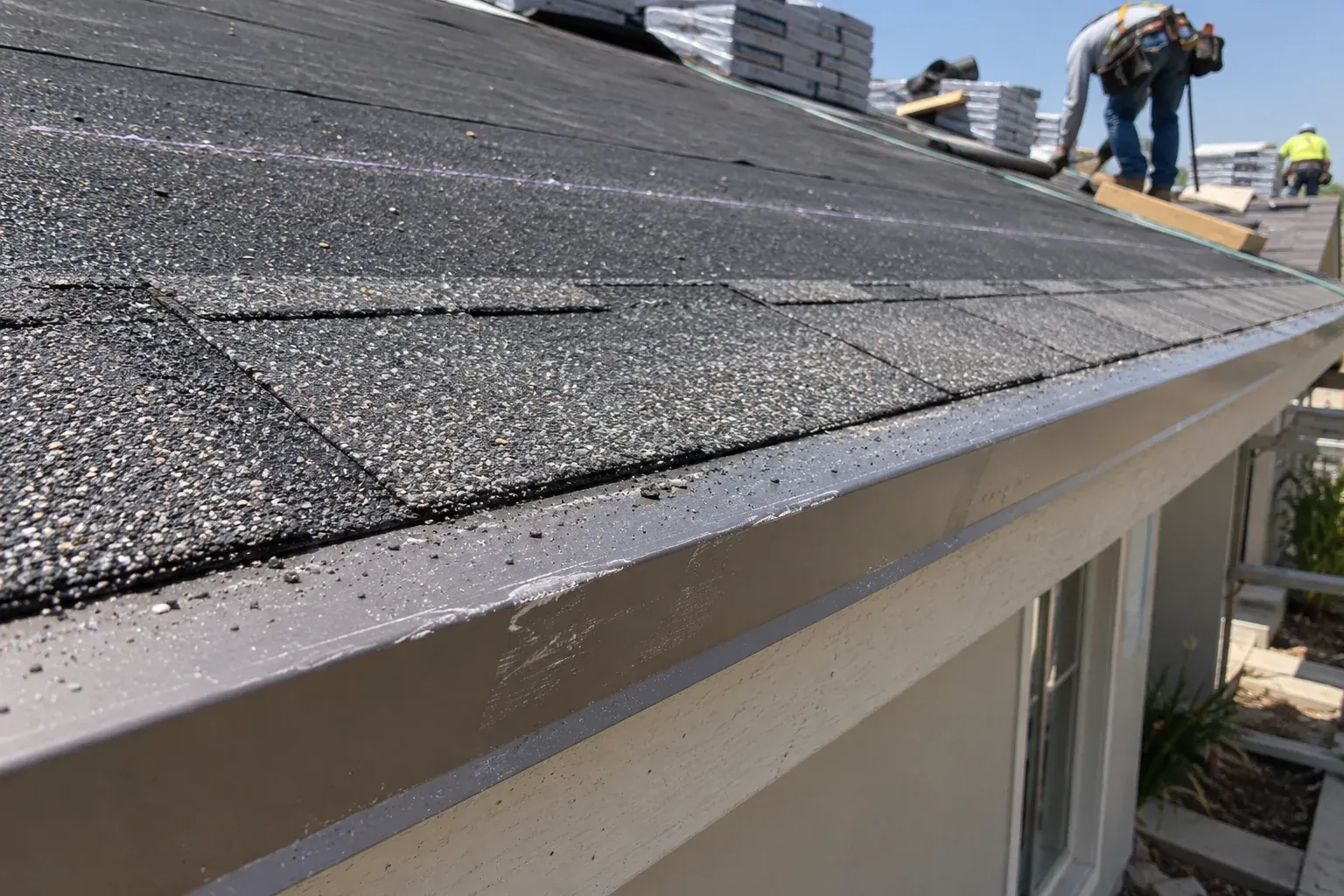
Drip edgeMetal edging at the eaves and rakes that directs water into the gutters instead of behind the fascia.
Starter courseA dedicated starter strip at the eaves seals the first row of shingles against wind lift, which is where blow-offs usually begin.
UnderlaymentA synthetic or felt underlayment goes down before the shingles as the roof's real waterproofing layer; the shingles themselves are the weather and UV surface on top of it.
VentilationRidge and soffit vents keep attic heat and moisture moving, which protects the underside of the decking and helps the shingles reach their rated lifespan instead of failing early from trapped heat.
Cost & Lifespan
LA-specific installed pricing runs roughly $6.50 to $15.20 per square foot, with about $8.50 commonly cited as an average — noticeably above the statewide California range of about $4.50 to $10. For about 2,000 sq ft of roof that's roughly $13,000 to $30,400 total, depending on shingle grade and roof complexity.
LA cost: published 2026 cost guides (RoofVista and HomeGuide). Lifespan: industry-consensus summaries (RoofOnline and published guides), 2026.
What Good Installation Looks Like
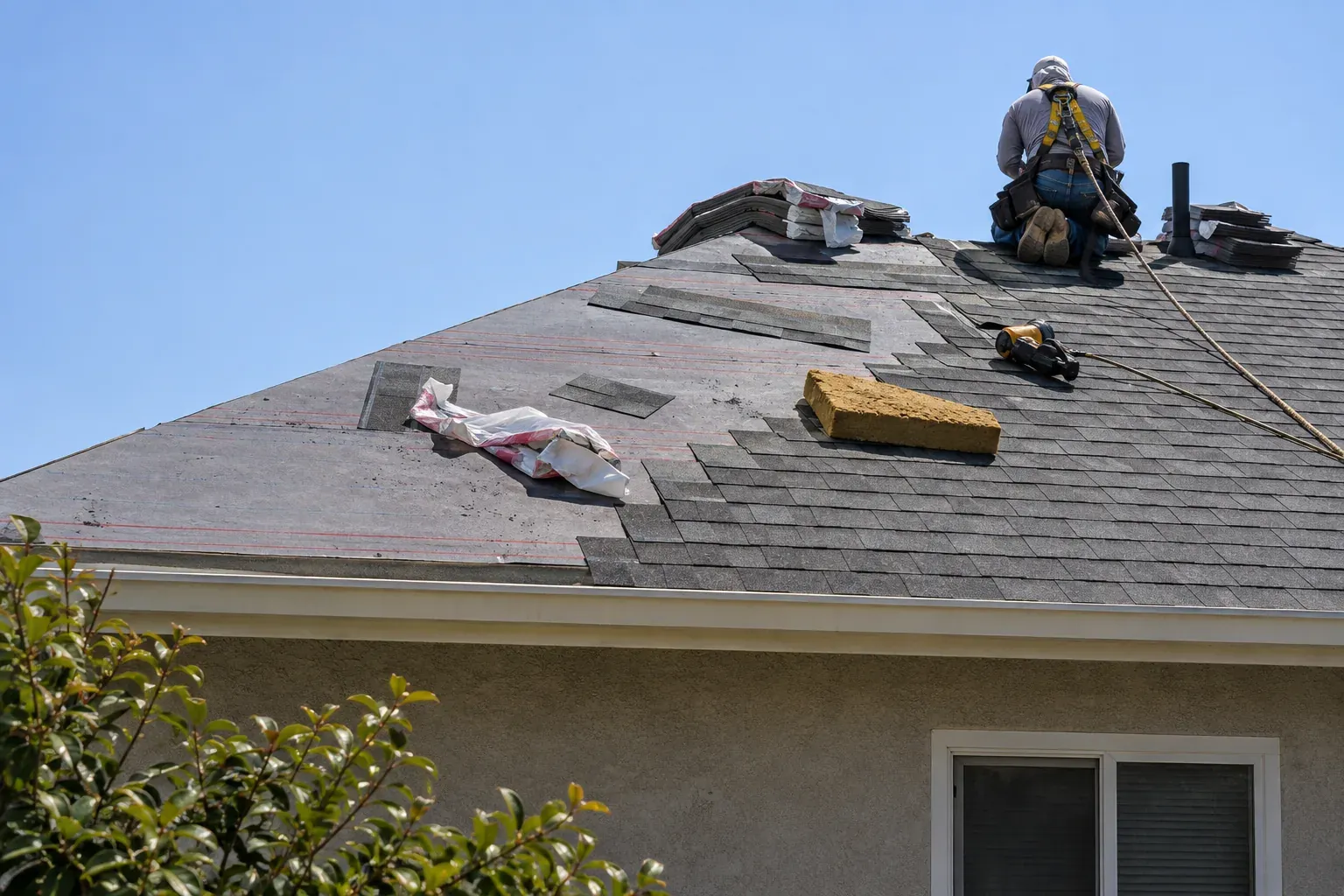
A shingle roof done right isn't just the finished surface — it's what's underneath it. Look for a crew that tears off down to the deck rather than layering over old shingles, replaces any soft or rotted decking they find, and installs drip edge, starter course and ridge ventilation as a matter of course, not as an upsell. Reroofing more than 100 square feet requires a permit from Los Angeles Department of Building and Safety (LADBS) in the City of Los Angeles. If shingle isn't the right material for your roof, see Roofing Los Angeles for the full range of materials and services.
Look for crews working tied off to roof anchors, with drip edge and underlayment installed before the shingles.
If wind or storm damage is isolated rather than roof-wide, that's usually a repair rather than a re-shingle; see roof repair in Los Angeles. For how shingle lifespan compares to tile, metal and flat roofing, see how long does a roof last in LA.
Shingle Roofing FAQs
What's the difference between 3-tab, architectural and designer shingles?
3-tab shingles are flat, uniform and the least expensive, with about a 60 mph wind rating and a shorter manufacturer warranty. Architectural shingles are thicker and layered for a dimensional look, carry 110 to 130 mph wind ratings (up to 150 on premium lines), and typically come with 30-year-to-lifetime manufacturer warranties. Designer or luxury shingles, such as shake-profile lines, cost more again. For installed prices in LA, see the cost range below.
How much does a shingle roof cost in Los Angeles?
LA-specific installed pricing runs roughly $6.50 to $15.20 per square foot, with about $8.50 commonly cited as an average, above the statewide California range of about $4.50 to $10. For about 2,000 sq ft of roof that's roughly $13,000 to $30,400 total.
Do asphalt shingles meet Class A fire rating?
Yes. Both 3-tab and architectural shingles can reach a Class A fire rating when installed over the correct underlayment assembly, and designer lines carry UL Class A ratings as well. The rating applies to the assembly as installed, not the shingle alone, so underlayment and installation details matter.
Are cool-rated shingles required in Los Angeles?
It depends on your climate zone. Under Title 24 (the 2025 Energy Code applies to permits applied for since January 1, 2026, and the reroof values are unchanged from 2022), residential steep-slope reroofs (the category shingle roofs fall into) require a cool roof in Climate Zones 4 and 8 through 15, which covers LA's San Fernando Valley (Zone 9) and South/East LA (Zone 8), but not coastal LA (Zone 6). Confirm your zone and the current numeric thresholds with your contractor at permit time.
How long do asphalt shingles last in LA?
Standard 3-tab shingles are commonly rated 20 to 30 years, and premium architectural and designer shingles 30 to 45 years. LA's UV exposure and Santa Ana winds tend to push actual service life toward the lower end of those ranges.
Does a 20-year-old shingle roof need replacing?
Not automatically, but it's worth an inspection. Standard shingles are rated 20 to 30 years, so a 20-year-old roof is entering the back half of its expected life. Whether it needs replacing now depends on granule loss, curling and how it's held up to LA's sun and wind, which is easier to judge in person than from age alone.
Do I need a permit to install shingle roofing in Los Angeles?
Reroofing more than 100 square feet in the City of Los Angeles needs a permit through LADBS, whether it's a recover or a full tear-off, and an inspection is required after tear-off. Small in-kind repairs usually don't need one. Other LA County cities have their own building departments.
Get a straight answer on your shingle roof
Tell us the roof's age, what you're seeing (curling, bald patches, a leak), and roughly where in LA you are. A good roofer gives a clear repair-or-replace call and a written price for whichever grade of shingle fits your budget.