Emergency Roof Repair in Los AngelesWhat to Do in the First Hour
Water coming through a ceiling doesn't wait for business hours. There's no phone line here: send the form and a roofer will reach out ASAP. Until then, the steps below limit the damage.
Protect what's inside firstMove valuables and electronics, put buckets under drips, and switch off power to any wet ceiling fixtures. If a ceiling is bulging with water, keep people clear from underneath it and let it drain into a bucket through a small puncture at the lowest point of the bubble.
Stay off the roofWet tile and shingles are slippery, and water-damaged decking can give way. Roof access is for the roofer who's tarping it, not for checking the damage yourself.
Photograph everything before touching anythingThe ceiling, the walls, and any visible exterior damage, with timestamps. Do this before you move furniture or start drying things out.
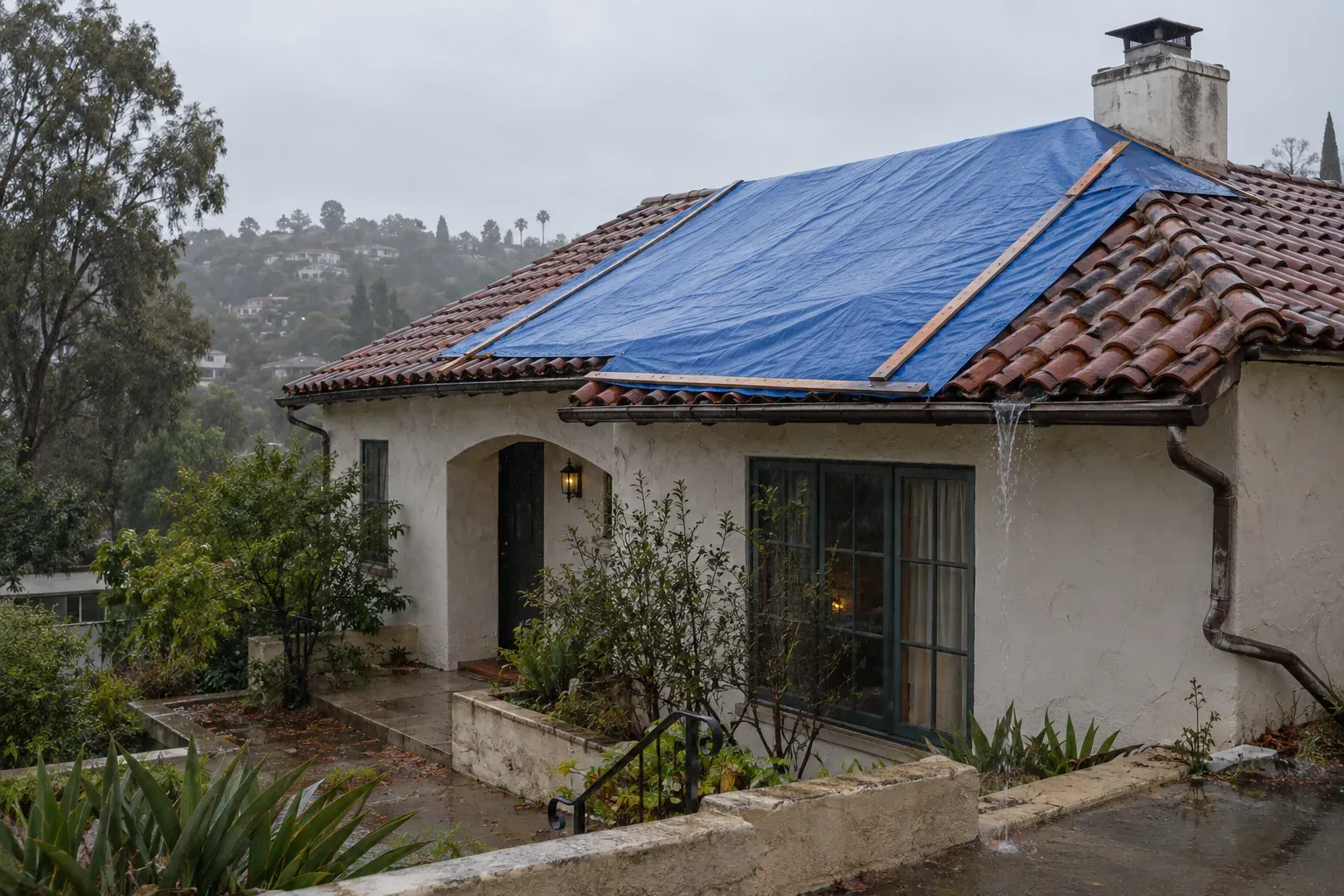
Get a tarp on itA properly secured tarp stops more water getting in until the permanent repair can happen in dry weather. The roofer tarps it first, then quotes the permanent repair.
A tarp is a stopgap, not a fix. Done right, it's cut larger than the damaged area, run up and over the ridge where possible so water can't get behind the top edge, and fastened down with wood battens, not loose rocks or bricks that can shift or blow off in the next round of wind.
Item
Typical cost
Emergency tarp, typical job
~$250–$900 total
After-hours rate
~$1.00–$2.80 per sq ft
Ranges from published 2026 cost guides, including HomeGuide. Size, slope and access move the total.
Standard tarps are built to last about 60 to 90 days, and thinner ones can start failing in as little as 3 months from UV, wind and debris. Heavy-duty 10-mil tarps can be engineered to hold up longer, up to about 2 years, but treat any tarp as a 30-to-90-day window to get the permanent repair scheduled, not a long-term cover.
Wind damage like this gets a tarp first; the permanent repair follows once it is dry.
Insurance and the Duty to Mitigate
California's Duty to Mitigate
After a covered loss, most California homeowners policies expect you to take reasonable temporary measures, tarping is the standard example, to prevent further damage. Insurers can decline to cover damage that happens afterward if reasonable steps weren't taken to secure the property. Many policies include "Reasonable Repairs" coverage that reimburses the cost of the temporary measure itself, separate from the permanent repair. The California Department of Insurance lists making temporary repairs as one of the most important steps after a loss. Keep the tarping invoice and your photos together with the claim. See our guide to roof insurance in California for more on what a policy typically covers.
If water's coming in right now, send the form and a roofer will reach out ASAP. While you wait, photograph the damage; that starts the documentation trail your insurer will want.
Santa Ana Wind and Storm Damage Patterns
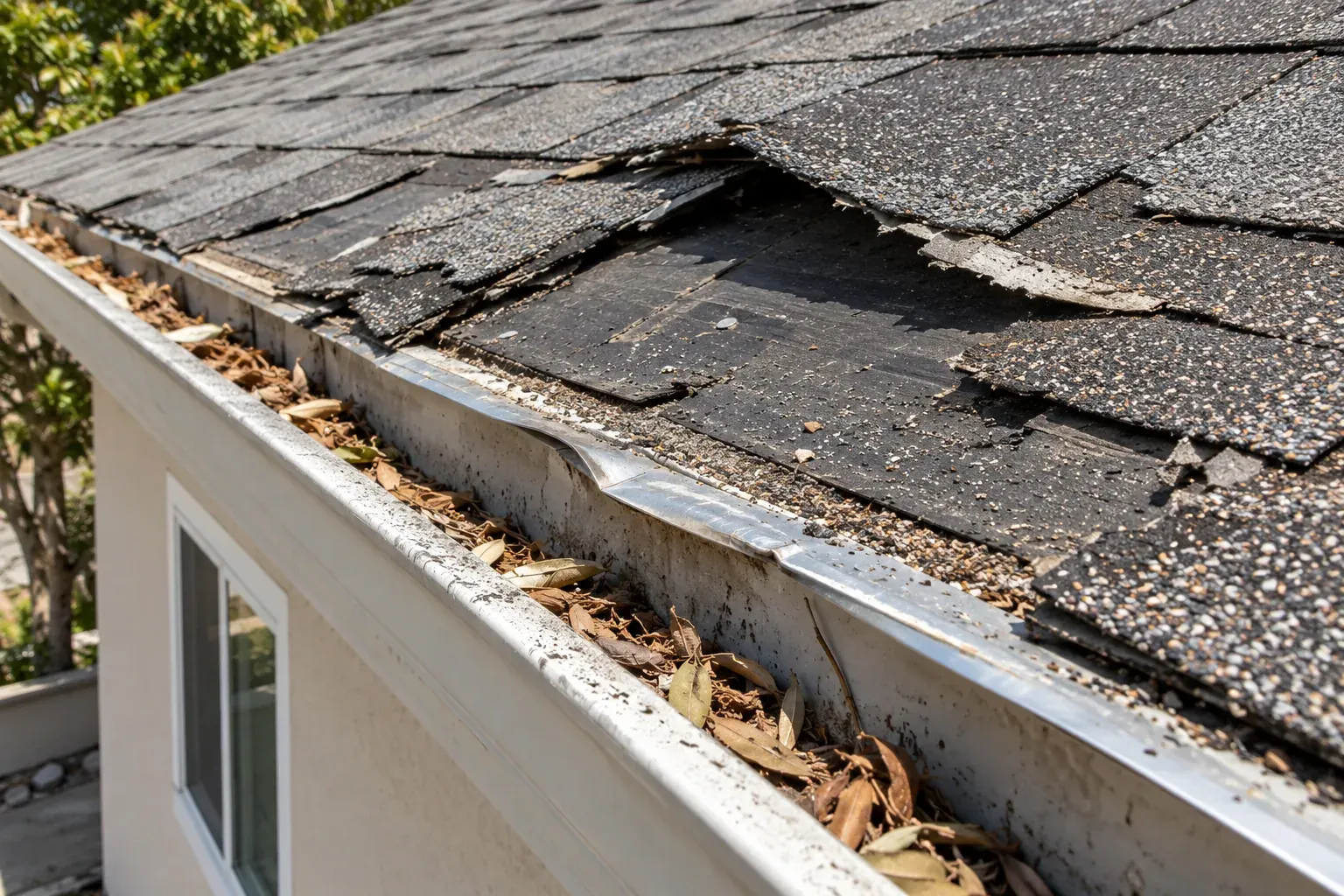
Santa Ana winds lift and crease shingles, and can slip or crack tile, especially where a tile was already loose or its fastening had weakened with age. Once a tile or shingle is out of place, the next rain gets underneath it fast. On flat and low-slope sections, wind-driven rain finds any open seam or lifted flashing at a parapet or curb, and that's usually where an emergency call traces back to. Storm damage in LA often shows up as a combination: wind exposes a weak point, then rain gets in during the same system or the next one that follows.
What Happens After the Tarp
Once the weather clears, the roofer should inspect the full extent of the damage, not just what's under the tarp, show you photos of what they find, and give you a written scope before the permanent repair starts. If the damage is limited to a section, that's a roof repair. If it isn't, a good roofer says so plainly rather than patching around it, and you can compare that against a full roof replacement with Roofing Los Angeles or check our roof replacement cost guide first. Either way, the tarp buys the time to make that call without water actively getting in while you decide.
Red Flags
Storm-Chaser Red Flags
After a big wind event, watch for door-knockers with no local address, pressure to sign a contract on the spot, a demand for a large cash deposit before any work starts, a quote with no permit mentioned, or a license number that doesn't match the company name on the CSLB site. A legitimate emergency response doesn't require signing anything before you've seen a written scope.
Emergency Roof Repair FAQs
How much is an emergency roof repair?
Tarping alone typically runs about $250 to $900, and large, steep or hard-to-reach roofs can cost more. A full after-hours emergency repair, not just the tarp, runs roughly $800 to $3,500.
How long does a roof tarp last?
A standard tarp is built to last about 60 to 90 days, and thinner ones can start failing in as little as 3 months from UV, wind and debris. A heavy-duty 10-mil tarp can be engineered to hold up longer, up to about 2 years, but treat any tarp as a temporary stopgap, not a lasting cover.
How do I do a temporary roof repair safely?
If it's a small area reachable from a ladder without stepping onto a wet or pitched roof, a weighted temporary cover is reasonable. Anything larger, higher, or on a steep or slippery surface is worth calling for. Wet tile and shingles are slippery and water-damaged decking can give way, which is why tarping is a job for a roofer with fall protection, not something to do yourself from the roof.
Will insurance cover emergency roof repair?
Most California homeowners policies expect you to take reasonable temporary measures, tarping is the standard example, to prevent further damage after a covered loss, and many include "Reasonable Repairs" coverage that reimburses the cost of doing so. Insurers can decline to cover damage that happens afterward if reasonable steps weren't taken. Keep the tarping invoice and your photos with the claim.
What's the average cost to replace a roof in California?
Whole-roof replacement runs far more than an emergency repair. Statewide, HomeGuide puts it at roughly $8,000 to $25,000 total for a typical California home, with most projects between $10,000 and $18,000; that is a California figure, not a Los Angeles one. In LA, about 2,000 sq ft of asphalt shingle roof runs roughly $13,000 to $30,400 and tile roughly $24,000 to $50,000.
What happens after the tarp goes up?
Once the weather clears, the roofer should inspect the full extent of the damage, not just what's under the tarp, show you photos of what they find, and give you a written scope before the permanent repair starts.
Water coming in right now?
Tell us what's happening and roughly where in LA you are. A roofer will reach out ASAP. The usual sequence is a tarp on the damage, photos for your records, and a written scope for the permanent repair once the weather clears.