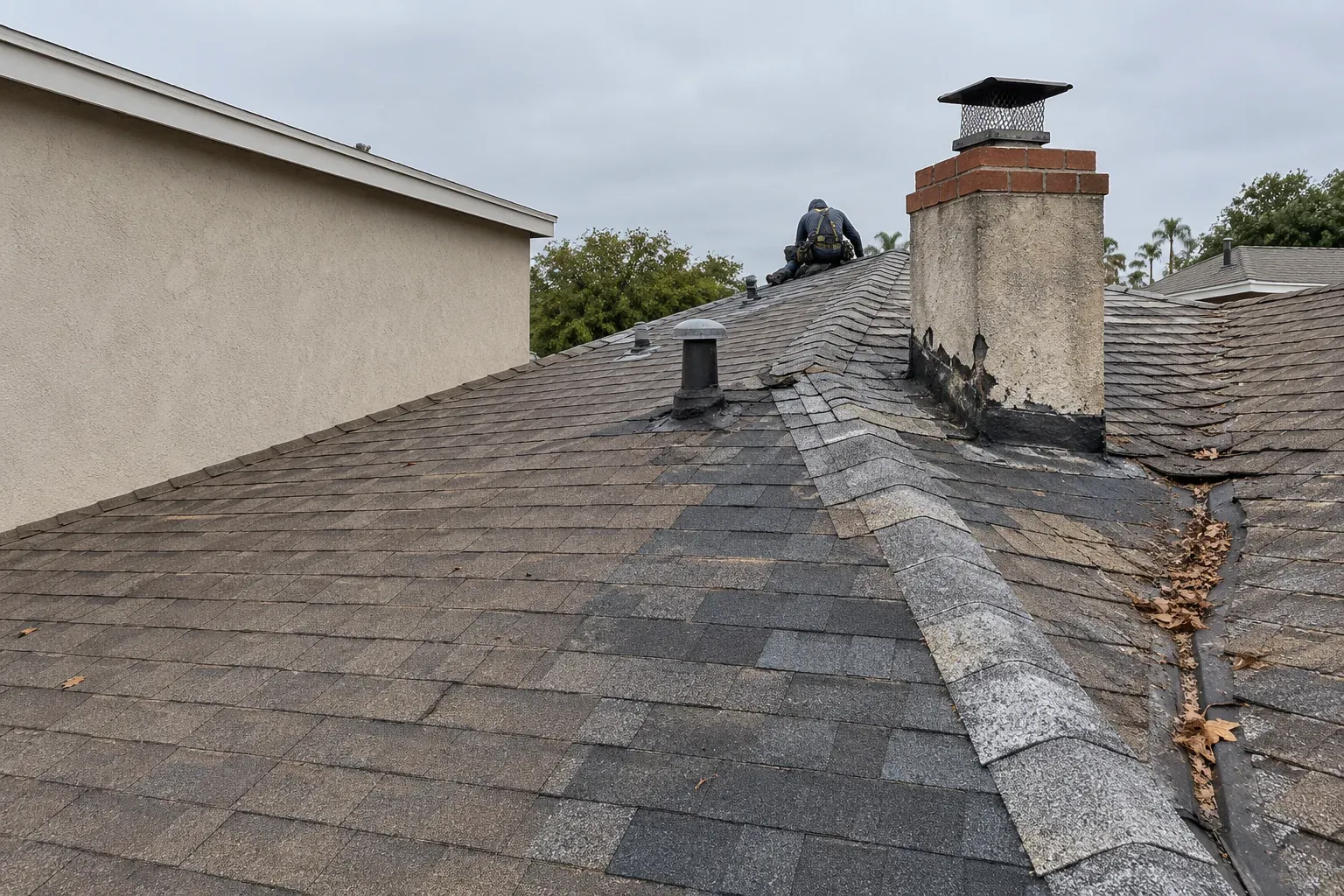
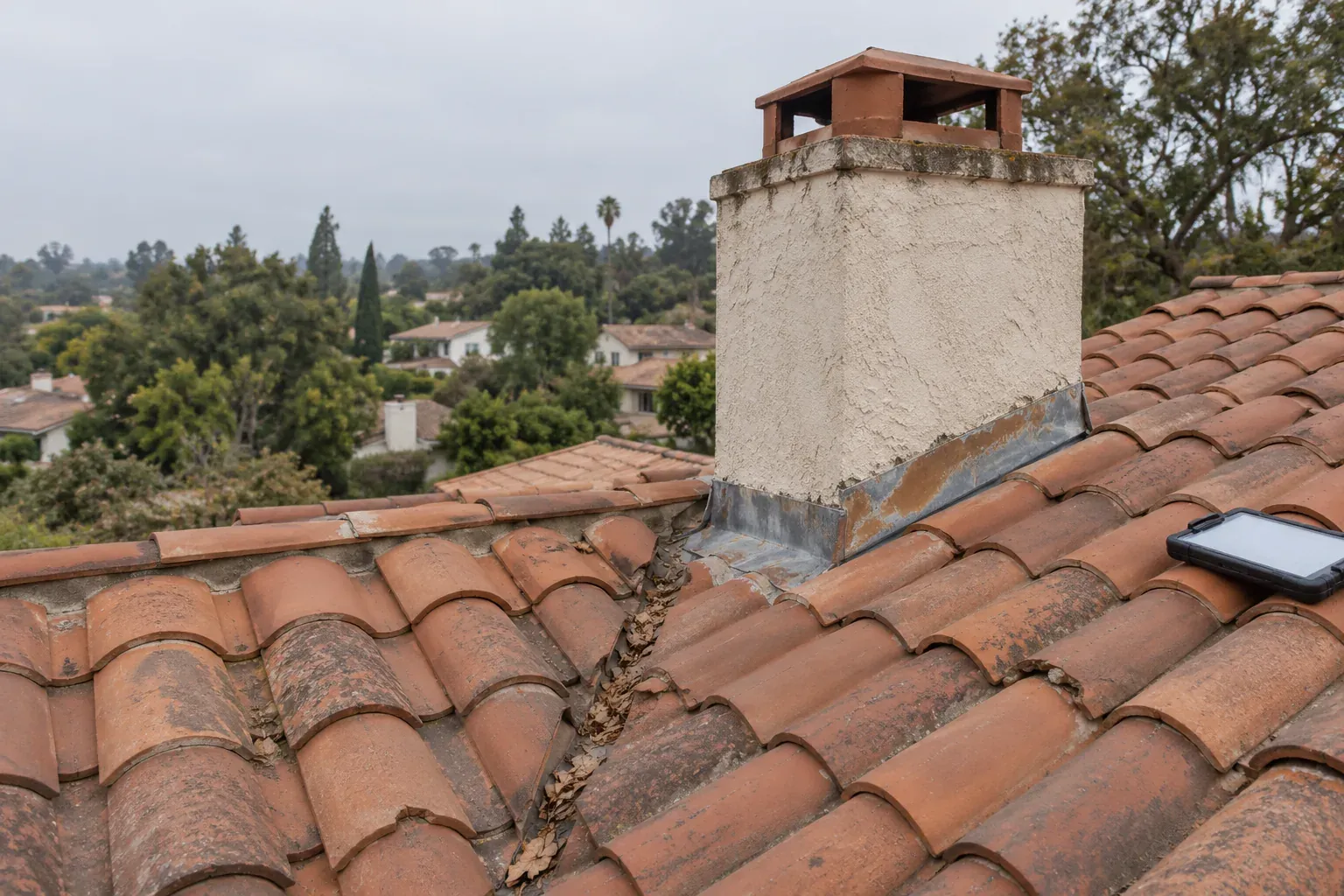
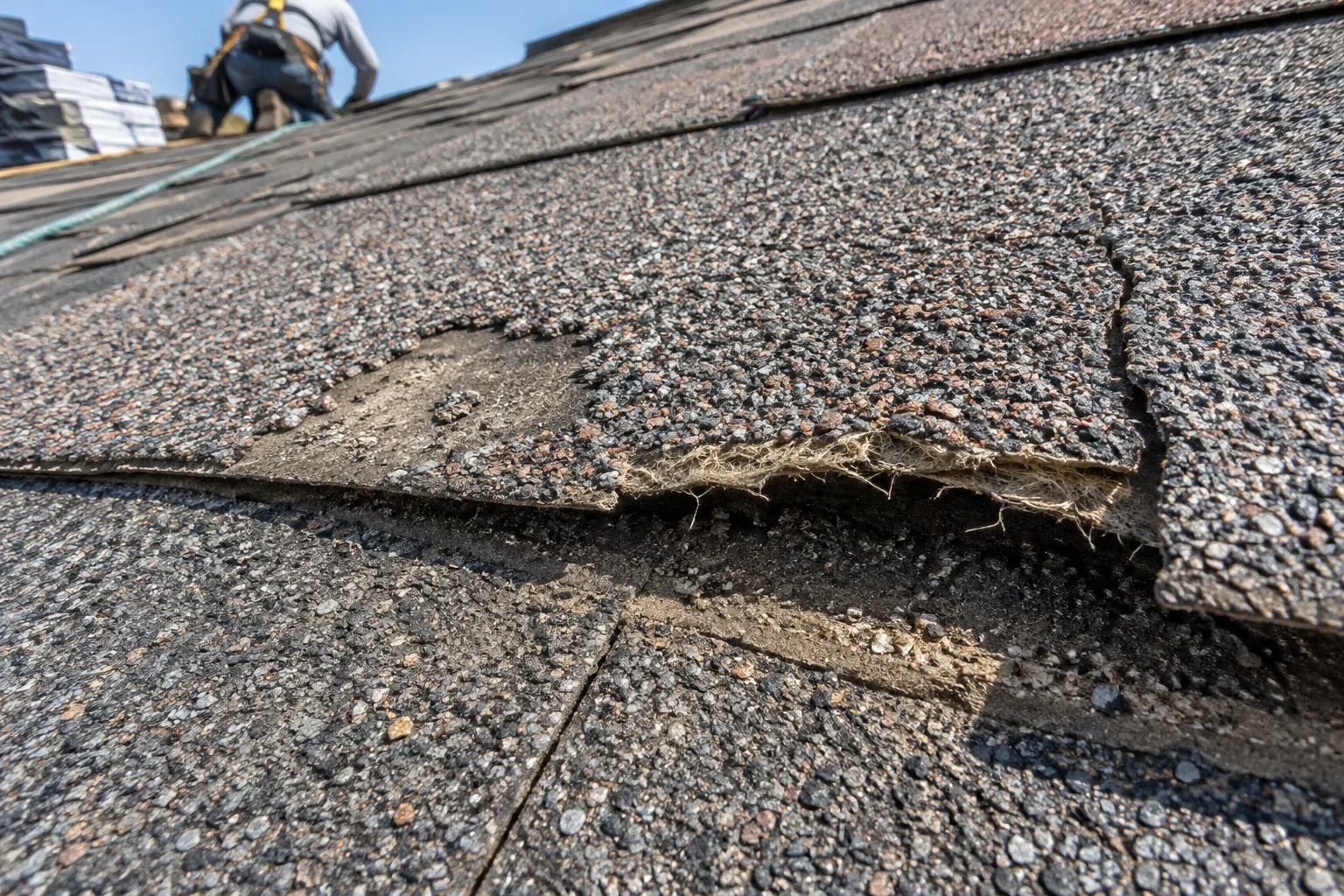
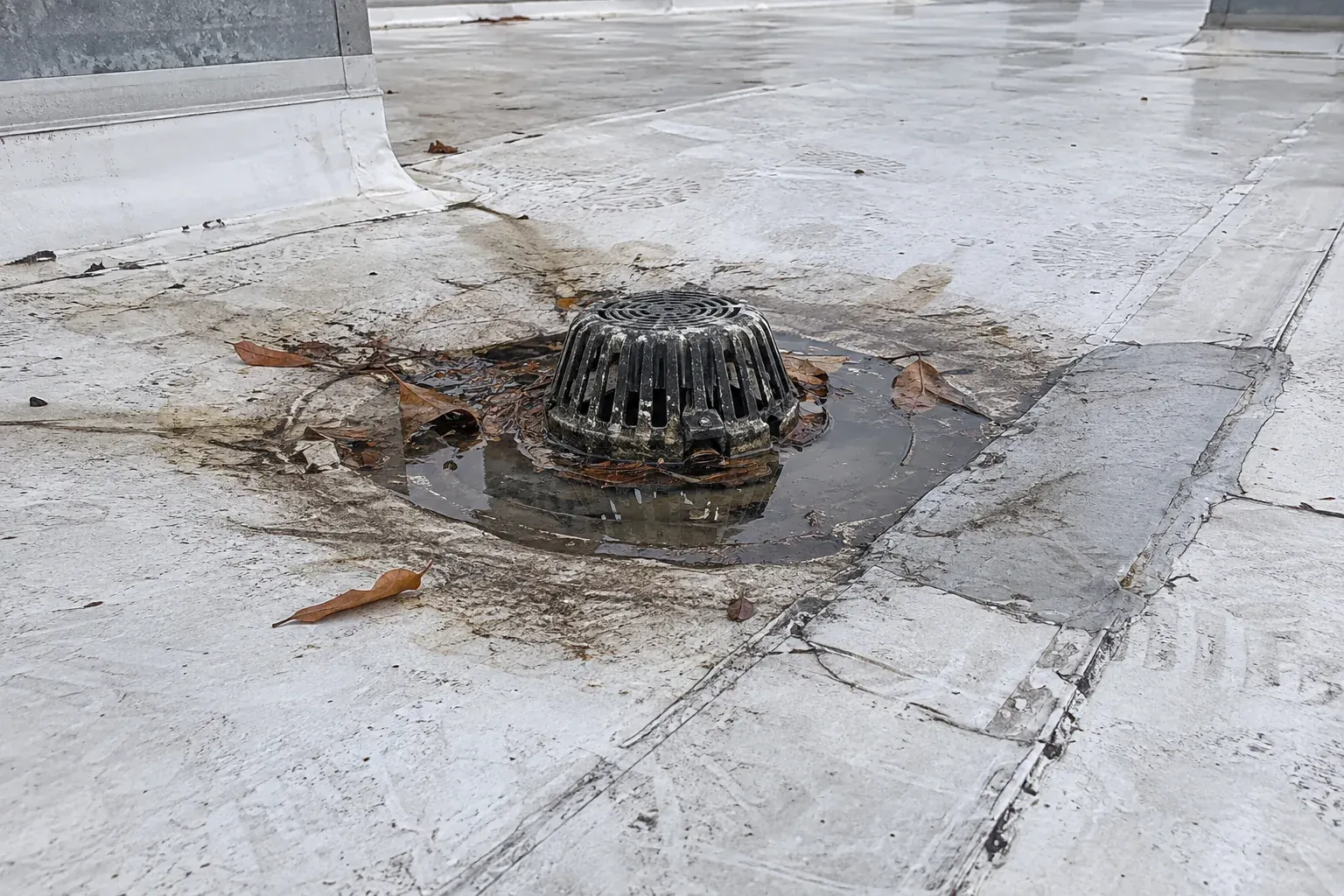
Select a condition to see what it usually points to. This isn't a diagnosis of your specific roof, just the pattern that holds most often.
Roof condition by type, and the fix it usually points to. Select a condition to highlight its signal.
Condition
Usually points to
Repair
Lift-and-relay (or full replace if tiles are also failing)
Repair
Replace
Repair
Restore / coat
Replace
Repair
Replace, and check permit rules below
NoticeRepair
CautionRestore
WarningReplace
Worn tileCurled shinglesPonding on a flat section
Age vs. Condition
Age is a starting point, not the answer. Weigh it against how long the material is actually expected to last:
Material
Typical lifespan
Asphalt shingle, 3-tab
20–30 yrs
Asphalt shingle, architectural
30–45 yrs (premium lines at the top)
Clay tile
50–100+ yrs (the tile; underlayment needs replacing much sooner)
Concrete tile
40–100 yrs
Metal (steel)
40–60 yrs
Flat, TPO / mod-bit
15–25 yrs
Roofing-industry lifespan summaries (RoofOnline and published guides), general consensus ranges, 2026.
A 20-year-old tile roof is well under halfway through the tile's life, though its underlayment may not be; a 20-year-old TPO roof is near the end of its typical range. See our full roof lifespan guide for every material.
The "25% Rule"
There is no single rule by that name, and LADBS doesn't publish one. The California Building Code does have reroof-area provisions: CBC §1505.1 exempts a partial reroof under 25% of the roof area from the Class A fire-rating requirement. At 25–50%, that requirement applies, with a possible waiver filed with the building official.
LA County separately allows in-kind replacement of damaged sheathing up to 25% of the roof without a permit for single-family homes, duplexes and townhouses. In the City of Los Angeles, the permit trigger is reroofing more than 100 sq ft, not 25%. Other cities set their own thresholds; Santa Clarita, for example, uses 10% and 50%.
Bottom line: a run of large "repairs" is worth checking against your building department before you approve the next one. Ask LADBS or your local building department, and don't rely on "25% rule" folklore.
Repair Cost Over Time
A single repair is almost always cheaper than a replacement. The question is what happens if the same roof needs a second, third or fourth one.
Item
Typical LA cost
Simple leak repair
~$350–$1,500
Typical repair
~$550–$2,100
Asphalt shingle replacement, 2,000 sq ft of roof
~$13,000–$30,400
Tile roof replacement, 2,000 sq ft of roof
~$24,000–$50,000
Published 2026 LA cost guides (RoofVista, HomeGuide); LA repair prices run above the national average. See the full roof replacement cost guide for the breakdown by material.
Three or four repairs in the $550–$2,100 range over a couple of years starts to approach a meaningful share of a full reroof, and each visit adds its own dispatch and access cost on top of the fix itself. If the same roof keeps generating new leaks in different spots, that pattern is usually the better signal than any single repair's price tag. Not sure where your roof stands? Send us a note.
Red Flags in a "You Need a New Roof" Verdict
Replacement is sometimes the right call. It should still come with evidence, not just an opinion. If the damage really is limited to one area, see roof repair in Los Angeles for what a properly scoped fix looks like. Either way, ask for both options priced in writing before anything is decided. Roofing Los Angeles can connect you with a contractor for that.
A same-day, sign-now verdict with no time to get a second opinion.
"The whole roof has to go" with no photos of the damage or the failed underlayment.
A quote that skips the permit line entirely.
A large cash deposit requested before any work starts.
A license number that doesn't match the company name on the CSLB license check.
Get a second look
If a "full replacement" verdict doesn't come with photos and a written scope, it's reasonable to ask for both, or to get a second opinion before approving the larger job.
Repair or Replace FAQs
How do I know if my roof needs repair or replacement?
Look at the condition, not just the age: isolated damage on an otherwise sound roof usually means repair, while failure spread across large areas, wet or soft decking, or several past repairs in the same year usually means replacement. Our decision table above breaks this out by roof type.
Does a 20-year-old roof need to be replaced?
Not automatically. A 20-year-old asphalt shingle roof (3-tab 20–30 years, architectural 30–45) is worth a close inspection. A 20-year-old clay tile roof (50–100+ years) or concrete tile roof (40–100 years) is usually still well within its service life, provided the underlayment beneath the tile hasn't failed.
Is repair always the cheaper option?
Not over time. A typical LA repair runs about $550 to $2,100. Three or four of those in a couple of years starts to approach a meaningful share of a full replacement, which runs roughly $13,000 to $30,400 for 2,000 sq ft of shingle roof. If repairs keep recurring on the same roof, replacement is usually the better long-run number.
How long does it take to replace a roof?
Installation on a typical asphalt shingle home takes 1 to 3 days. Tile roofs usually take 6 to 12 days and metal roofs 7 to 14 days. With permits, material delivery and inspections, most projects run 2 to 3 weeks from signing to completion.
Get a straight answer on repair vs. replace.
Tell us the roof type, roughly how old it is, and what's happening. A roofer will reach out. Ask for photos of the actual condition and a written recommendation, priced both ways, before anything is decided.