Cool Roof Rebate
Mid-City is served by LADWP, so residential customers can look at its Consumer Rebate Program. The Title 24 guide has the current terms.
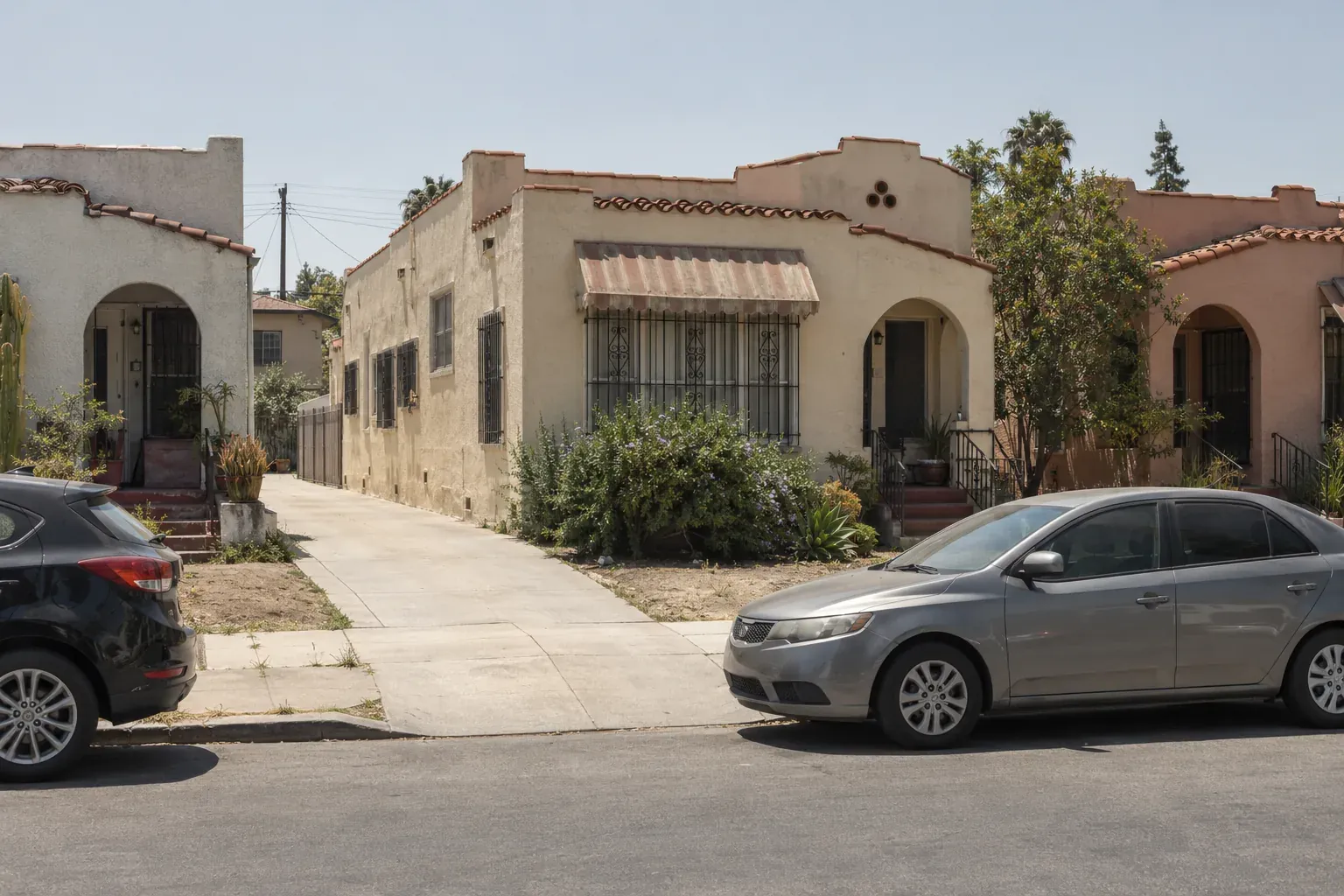
Mid-City sits across two Title 24 climate zones and is ringed by four separate historic districts. The districts, more than the zones, decide what a reroof at your address involves.
What's happening with your Mid-City roof?
Mid-City's core, the 90019 zip covering Country Club Park and the area most commonly called Mid-City, sits in Title 24 Climate Zone 9. The adjacent 90016 zip, West Adams, often gets grouped in with Mid-City on maps and by residents, but it's Climate Zone 8. Both zones are covered by the steep-slope and low-slope cool-roof reroof rules, and the reflectance and emittance thresholds are the same in each; the zone only decides whether a rule applies. Confirm your zip anyway, since "Mid-City" on a map is not one zone.
LADBS handles permits here the way it does across the rest of the city. Mid-City sits roughly equidistant between the Metro Downtown and West LA Development Services Centers, with no published boundary assigning the neighborhood to one over the other, so most owners simply file an Express Permit online rather than worry about which office is "theirs."
Mid-City is served by LADWP, so residential customers can look at its Consumer Rebate Program. The Title 24 guide has the current terms.
Mid-City isn't inside one historic district, it's surrounded by several. The Miracle Mile HPOZ covers 1,347 properties bounded roughly by Wilshire Boulevard, San Vicente Boulevard, La Brea Avenue and Orange Grove Avenue, with construction spanning 1921 through the 2010s and a dominant period of the 1920s-40s, plus the adjoining Miracle Mile North HPOZ. On the West Adams side, the Harvard Heights HPOZ protects single-family homes including the only remaining Greene & Greene-designed house in Los Angeles, and the Jefferson Park HPOZ covers another concentration of early-20th-century homes.
If your property sits inside one of these boundaries, reroofing a contributing structure goes through HPOZ Board or staff design review for in-kind versus material change, in addition to the standard LADBS permit. Confirm your exact parcel against LA City Planning's HPOZ map before assuming coverage either way.
Mid-City is flat urban terrain with no hillside interface, so it falls outside the city's Very High Fire Hazard Severity Zone layer.
The bungalow tracts near the Miracle Mile, Harvard Heights and Jefferson Park HPOZs are mostly clay tile or composition shingle. See tile roofing and asphalt shingle roofing.
Boulevard-facing apartment buildings carry low-slope membrane roofs that need their own drainage check. See low-slope membrane roofing.
Victoria Park has bigger, older houses, such as the 1911 Holmes-Shannon House. Larger old houses tend to have several roof planes and later additions, so material and condition can vary across one roof.
HPOZ review affects material choice, so find out whether your address is inside a boundary before you settle on a scope.
Ballona Creek runs through Mid-City, crossed by three road bridges at Hauser Boulevard, Burnside Avenue and Thurman Avenue. It isn't a roofing-material driver on its own, but it's worth factoring into gutter and drainage planning for properties near the creek corridor, where runoff patterns differ from blocks further from the channel.
It depends on the exact zip. The 90019 core, Country Club Park and the area usually called Mid-City, is Climate Zone 9. The neighboring 90016 zip, often grouped in with Mid-City as West Adams, is Climate Zone 8. Both zones are covered by the steep-slope and low-slope cool-roof rules with the same thresholds, so the split matters mainly for confirming your parcel.
Possibly. Mid-City is ringed by City HPOZs rather than covered by one that spans the whole neighborhood: Miracle Mile, Miracle Mile North, Harvard Heights and Jefferson Park. If your address sits inside one, a reroof on a contributing structure goes through HPOZ Board or staff review for in-kind versus material change, on top of the standard building permit. Check your specific parcel against LA City Planning's HPOZ map.
LADBS, the same as the rest of the City of Los Angeles. Mid-City sits roughly equidistant between the Metro Downtown and West LA Development Services Centers, and there's no published boundary assigning it to one over the other, so most owners file online as an Express Permit rather than worrying about which office is technically closer.
Not the roofing material itself. Ballona Creek runs through Mid-City, crossed by bridges at Hauser Boulevard, Burnside Avenue and Thurman Avenue, and runoff patterns near the creek corridor differ from blocks further away, so it's worth factoring into gutter and drainage planning there.
No. Mid-City is flat urban terrain with no hillside or brush interface, so it sits outside the city's Very High Fire Hazard Severity Zone layer, unlike the hillside neighborhoods to the north.
A mix that follows the neighborhood's uneven development: 1920s-40s bungalow tracts near the HPOZ districts, dense mid-rise apartment buildings on the larger boulevards, and some larger early-1900s houses in Victoria Park, such as the 1911 Holmes-Shannon House. Tile and shingle dominate the single-family stock, while the apartment buildings are mostly low-slope.
Koreatown is just north, and South Los Angeles borders Mid-City's Jefferson Park edge. See every neighborhood on the areas page. For services beyond Mid-City, see Roofing Los Angeles.
Tell us your address, whether you're near one of the HPOZ boundaries, and what you're seeing on the roof.